
A friend of mine got a quote to replace her water heater last month. Eleven hundred bucks. For a water heater. She called me half-laughing, half-furious, because the last one she bought, maybe nine years ago, ran her a few hundred installed.
That gap is the whole story right there.
If your house has felt like a slow leak in your bank account lately, you’re reading the situation correctly. It’s not in your head, and it’s not because you’re doing something wrong. In 2025, around 85% of American homeowners got hit with a repair they never budgeted for, according to a Clever Real Estate report. A quarter of them dropped five grand or more on it. One in six paid out at least ten thousand.
So what’s going on? A few different things, all happening at once, all pulling in the same ugly direction. Let me walk you through it.
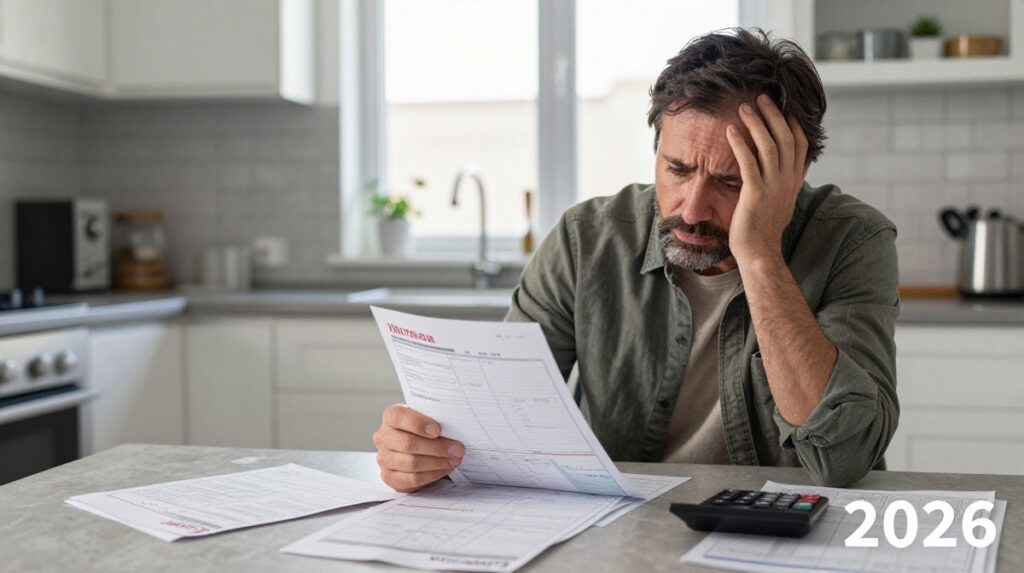
How bad is it, really?
Bad enough that the data is almost boring. Repair costs are running about 18% higher than they were three short years ago. And we’re not talking about one weird category dragging up the average — it’s everything. Pipes, panels, shingles, furnaces. All of it up.
Worse, nobody expects relief. Roughly 80% of homeowners think their repair and upkeep bills will climb again in 2026, per Kin’s Homeownership Trends Report. I’d bet they’re right.
And here’s the cruel twist with repairs specifically. You can talk yourself out of a vacation. You can live with the ugly couch another year. But a dead furnace in February? That’s not a “let’s wait for a sale” situation. You pay the going rate, today, and the going rate keeps going up.
Five reasons that’s happening. Pour a coffee.
READ MORE Signs Your Air Conditioner Could Fail This Summer
READ MORE 10 Home Maintenance Tasks You Should Never Ignore
Reason one: materials got expensive and stayed that way
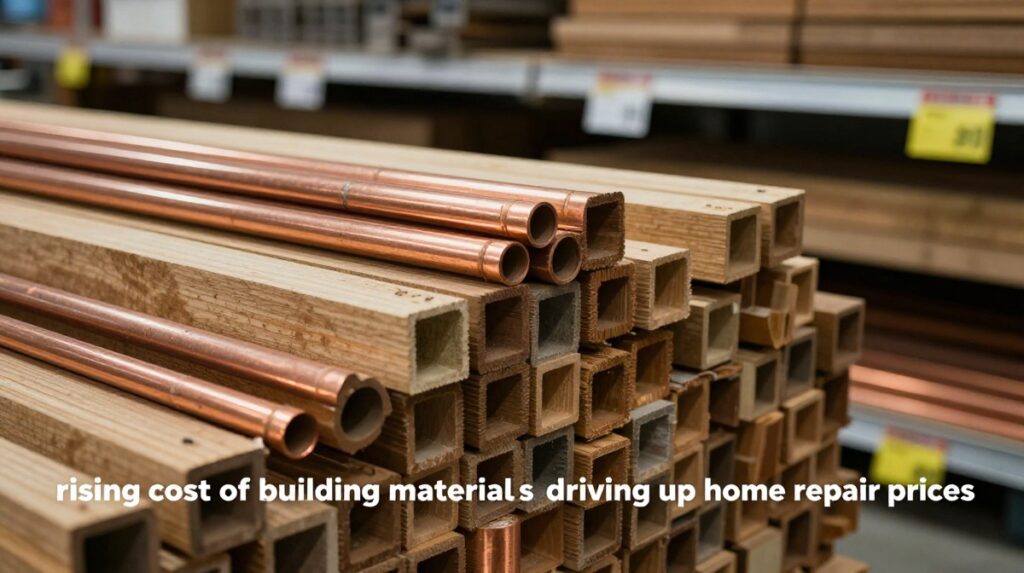
Wander through a hardware store and run your eyes over the price tags. Lumber, copper, steel, aluminum — still puffed up compared to the before-times. Some of that is leftover supply-chain mess from a few years back that just never fully unwound. The cost settled in and made itself at home.
Then tariffs showed up and poured gas on it.
About 60% of homeowners now say tariffs are messing with their renovation plans, and contractors are bracing for tariff-affected materials to jump another 15% to 20% on top of where they already sit. You might never see that line item. It hides inside the roof, the remodel, the “simple” fix. But it’s in there.
Quick gut check. A roof swap eats thousands in shingles and metal flashing before anyone climbs a ladder. A bathroom redo leans hard on tile, copper, and imported fixtures. Your contractor isn’t getting greedy — he’s paying more at the counter and handing the difference to you. That’s the whole mechanism.
Reason two: good tradespeople are hard to find
Try booking a decent electrician on short notice. Go on, I’ll wait.
Here’s the thing nobody planned for. We spent two decades steering kids away from the trades, and now a huge slice of the experienced crew is heading for retirement. Fewer plumbers, fewer carpenters, fewer HVAC techs. More homes that need them. You know where that math ends up.
Wages tell the tale. Construction pay for nonsupervisory workers climbed 9.2% year over year, going by a fall 2025 Home Builders Institute report. That raise doesn’t vanish into the ether — it shows up on your estimate.
And it’s not stopping. A 2026 contractor outlook found that 72% of contractors plan to bump their rates this year, and get this: only 18% blamed higher demand. The rest pointed straight at materials, labor, and plain old inflation. So even in a dead month, your repair isn’t getting cheaper.
The 2 a.m. surcharge
There’s also the panic tax, and it’s real.
When the pipe lets go on a holiday weekend, you’re not collecting three estimates. You’re calling whoever answers and saying “please, today.” Roughly 72% of homeowners admit they’ll pay extra for a same-day fix. Contractors know it too. Desperation has a price, and an emergency hands you zero room to haggle.
Reason three: your house is older than you think
Now forget the contractor for a second and look at the building itself.
American homes are getting up there in years. The typical owner-occupied home now sits at around 42 to 44 years old, up from just 31 back in 2005, per NAHB’s read of Census data. Close to half of them went up before 1980. That’s not a fun-fact — it’s a maintenance forecast.
Because everything in a house is on a clock:
- A roof might give you 20 to 30 years, then it’s done.
- A water heater? Eight to twelve, like my friend learned.
- Furnace and AC, maybe 15 to 20 if you’ve been lucky and diligent.
- The pipes and wiring in a pre-1980 place are often living on borrowed time already.
The nasty part is the timing. Once a house crosses 40, these systems don’t fail one polite at a time. They start going more or less together. And the gap between old and new is staggering — homes built before 1940 are something like 30 times more likely to be in rough shape and cost nearly 10 times more in routine upkeep than houses built after 2022, per Construction Coverage. We didn’t build enough new homes for years, so people keep buying and holding the old ones. The repair tab comes with the keys.
Reason four: insurance quietly stopped catching you
This one blindsides people, and it makes me a little angry on their behalf.
For a long time, the deal felt simple. Big problem, file a claim, insurer helps. That cushion has gotten thin.
Premiums first. The average home insurance bill shot up 24% between 2021 and 2024, landing somewhere around $3,303 a year, according to the Consumer Federation of America. Most forecasters expect another increase in 2026 — that’d be five straight years of climbing.
But the premium isn’t even the sneaky part. Watch the deductible. The average one rose 22% in 2025, up from a 15% bump the year before, per Matic. Read that again. Insurers are openly pushing more of the cost onto you before they’ll pay a cent.
And if your house is older, they’re getting picky:
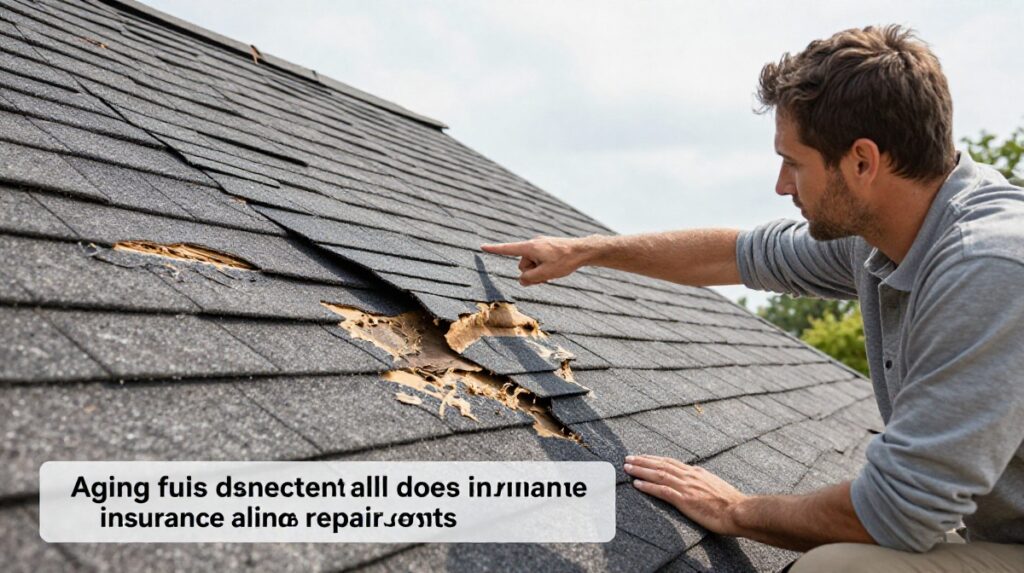
- Roof older than 10 or 15 years? Some carriers want it replaced before they’ll even renew you.
- Aging plumbing or a couple of past claims? Hello, stricter underwriting and a fatter deductible.
- Too many claims on the record? You might just get dropped.
So you’re paying more for a policy that does less, while being told to fix the house out of pocket simply to stay insurable. The repairs that used to be a shared burden have quietly become entirely yours.
Reason five: the waiting game backfires
Alright, gentle truth time. Some of this is the house. Some of it is timing — and that part’s on us.
About 65% of homeowners have shrugged off a maintenance job in the past five years. Usually for a perfectly human reason. Money’s tight, the stain on the ceiling isn’t screaming yet, the drip can wait till payday. I’ve done it. You’ve probably done it.
The trouble is, small problems don’t stay small. They sit there and grow teeth. Research on deferred maintenance puts it bluntly: every dollar you skip today can come back as four or more later, depending on what broke and how long you ignored it.
You can see the dominoes:
- A $300 roof patch you put off turns into a $15,000 roof-and-ceiling nightmare once water finds its way in.
- A pinhole leak becomes a rotted subfloor and a mold problem.
- A wheezy old furnace becomes a stone-dead furnace during a cold snap — emergency surcharge included, naturally.
Waiting feels like saving. It’s the opposite. You’re just financing a bigger bill on terrible terms.
The trap a lot of folks are stuck in
Stack all of that up and you’ve got a vise. Costs up, coverage down, houses aging, and most people caught completely unprepared.
Here’s the figure that should make you sit up: 58% of homeowners have nothing — zero — saved for emergency repairs. So when the bill hits, they grab the only lever left. Debt. Nearly 30% have borrowed to finish a home project, and half flat-out say there’s a repair they need right now and can’t afford. That’s how a $6,000 job quietly mutates into a $9,000 one once interest joins the party.
Even the old rule of thumb is out of date. People used to say set aside 1% of your home’s value a year for upkeep. For today’s tired housing stock, financial folks are now nudging that to 2% or 3%. The target moved. Most budgets didn’t move with it.
So what do you actually do?
Enough gloom. You can’t personally fix tariffs or summon a thousand new electricians. But you’ve got more control than the panic suggests.
Start a fund and stop pretending repairs are surprises. They aren’t surprises. They’re appointments you haven’t scheduled yet. Open a separate account, drip money into it automatically every month, and aim for that 2% to 3% if your place is older. A small steady transfer beats a frantic withdrawal every time.
Murder the little problems while they’re little. This is the highest-return move you’ve got. Walk your gutters, roofline, and foundation twice a year. Chase a leak the day you spot it, not the month after. Replace aging parts on a calendar you control instead of at 11 p.m. during an emergency. A planned repair lets you shop around, pick your materials, and skip the panic premium. A crisis robs you of all three.
Get ahead of your insurer. Don’t wait for the renewal letter to discover you’re underinsured or about to be dropped. Know your deductible to the dollar and keep that much in cash. Keep your roof and big systems maintained and documented, because that genuinely affects whether they’ll keep you. And shop your policy every single year — loyalty earns you nothing here. The same house gets wildly different quotes from different carriers.
Be a smarter customer. Pull at least three written quotes for anything substantial. Book non-urgent work in a contractor’s slow season when they might actually sharpen the pencil. And bundle related jobs into one visit so you’re not paying for three separate trip charges.
The honest takeaway
Your repair bills are high for reasons that mostly have nothing to do with you. Pricier materials, tariffs, a thin bench of skilled labor, a housing stock quietly hitting middle age, and insurers backing toward the exit. That’s the rough news.
The better news is who gets hurt and who doesn’t. The people who get clobbered are the ones with no fund, no plan, ignoring the small stuff until it detonates. The people who stay calm budget for it, catch trouble early, and hire with their eyes open.
You can’t boss the market around. You can decide whether it gets to boss you. Open the repair account this week. Fix the small annoying thing today. Read your policy before it reads you.
The house is going to cost you money — that part’s non-negotiable. The only real question is whether you pick the timing, or it picks for you.
Frequently Asked Questions
How much should I budget for home repairs each year?
The classic answer was 1% of your home’s value. For older homes, which is most of them now, plan closer to 2% or 3%. On a $400,000 house, that’s realistically $8,000 to $12,000 a year set aside.
Why are repair costs climbing so fast in 2026?
Four overlapping forces. Pricier materials made worse by tariffs, a real shortage of skilled tradespeople pushing wages up, an aging housing stock with systems failing all at once, and insurers shoving more cost onto homeowners through bigger deductibles and stingier coverage.
Is it smarter to wait for repair prices to come back down?
Probably not. Contractors aren’t expecting their rates to fall — 72% plan to raise them in 2026. And every dollar of repair you delay tends to cost four or more later. Waiting usually loses.
Will my insurance cover the big repairs?
Less than it once did. Policies generally cover sudden damage, not slow wear and tear, and rising deductibles mean a chunk comes out of your pocket before coverage kicks in. An old roof or aging systems can even get you dropped altogether.