
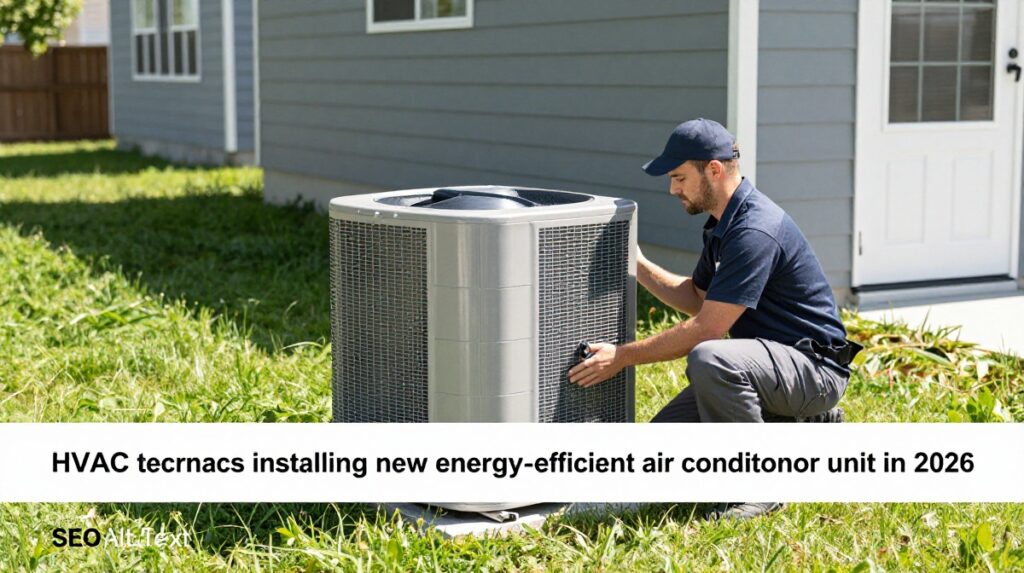
I noticed it back in May. Three new condensers on my street alone, all within a couple weeks of each other. Same beige siding, same era of house, same dead AC out back.
That’s not random.
For years, the advice was basically: keep the old thing alive. Recharge it, baby it, get one more season out of it. I gave that advice myself, plenty of times. In 2026 I’m mostly not giving it anymore, and I want to explain why, because the reasons aren’t the ones most blogs are pushing.
Let me get into it.
The Refrigerant Story Is the Real Story
Start here, because everything else hangs off it.
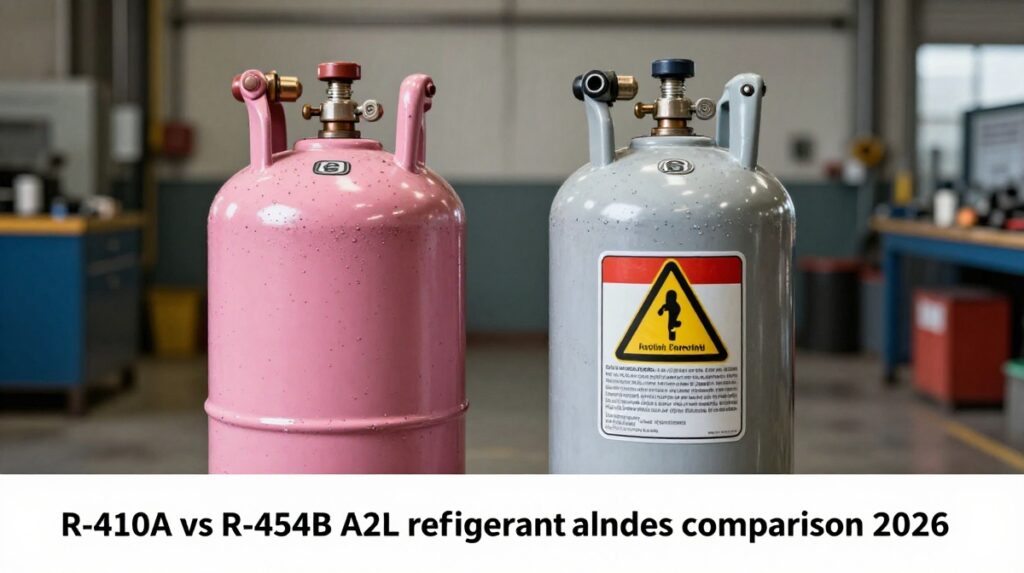
Your old AC almost certainly runs on R-410A. It was the standard for about twenty years. Reliable stuff. The problem is its global warming potential is enormous, and the EPA’s AIM Act finally caught up with it.
So as of January 1, 2025, manufacturers quit building new residential systems that use it. Just stopped. The factories moved on.
Now, that doesn’t mean your existing unit is illegal or about to be confiscated. Relax. You can keep running and servicing an R-410A system as long as the refrigerant is available.
But “available” is doing a lot of heavy lifting in that sentence.
Here’s What It Actually Costs You
When supply drops and demand doesn’t, you already know how this goes.
R-410A used to run something like $8 to $12 a pound wholesale. In some markets right now it’s $25 to $45. The gas didn’t change. The math did.
Picture a normal little service call. A top-off that ran somebody around $195 in 2023 is getting quoted closer to $580 today. Nothing about the system broke any worse. The refrigerant just got hard to come by.
And it climbs from here. Every year, the allowed production shrinks a little more, and the price ticks up.
So you end up in this trap:
- The recharge costs more than it used to
- It’ll cost even more next summer
- And you’re spending it all on a unit that’s already old
I’ve had a customer fight me on this — wanted to dump six hundred bucks of refrigerant into a system I’d already told her was on its way out. (Drop in your own version of this story here. A real customer, a real number, a real moment you bit your tongue. That detail is worth more than anything I can write for you.) She did it. It leaked out again by August.
MORE 7 HVAC Mistakes That Can Increase Your Energy Bill
What the New Stuff Runs On
New equipment uses what the industry calls A2L refrigerants. Two names you’ll see: R-454B and R-32.
Much friendlier on the climate. R-454B comes in around 78% lower than R-410A on global warming potential, which was the entire point.
Catch is, they’re mildly flammable. Not “your house explodes” flammable — somewhere well below a propane tank — but enough that the safety rules changed. Every new system now comes with leak-detection sensors built right in. No upcharge. It’s just part of the box now.
One hard rule, and I mean hard: you cannot pour R-454B into an old R-410A system. Different pressures, different design, full stop. If a contractor tells you he’ll “convert” your old unit to dodge the refrigerant cost, end the conversation. He’s either confused or trying to pull one over on you.
About That Tax Credit Everyone Keeps Asking Me
I’m going to save you a phone call. The tax credit is gone.
People still ask, almost every week, because for a few years there was a genuinely good one. The Section 25C credit handed you up to $2,000 back on a qualifying heat pump. It was written to last all the way through 2032.
Then the One Big Beautiful Bill Act got signed on July 4, 2025, and quietly pulled the plug early.
The IRS language isn’t subtle. No credit for any system placed in service after December 31, 2025. Install in 2026, your federal credit is nothing. Zero.
I’m spelling this out because half the HVAC sites and even some tax software still haven’t updated their pages. Don’t budget around money that isn’t there.
Funny enough, this is part of why so many units went in last year. People scrambled to beat the December deadline. Now the rest of us are just doing the math without the rebate cushion — and the math still says replace.
What You Can Still Get
Federal’s done. Local isn’t.
Depending on where you live, you might still pick up:
- State rebate programs running on leftover IRA funding
- Utility rebates for efficient gear, sometimes $1,000 all the way to $8,000
- Manufacturer and contractor promos on specific models
Big one people miss: a lot of these need pre-approval before you install. Get the unit in first and you can lose the whole thing. So check, then sign. Not the other way around.
MORE How Often Should You Service Your HVAC System?
A Lot of These Systems Are Just… Old
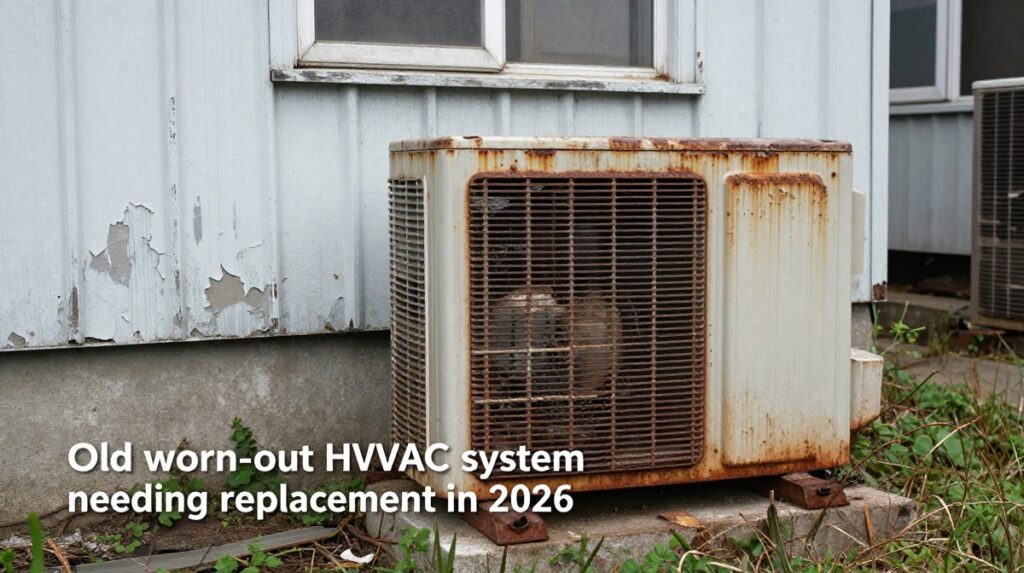
Set the rules aside for a minute. There’s a dumb-simple reason 2026 is a replacement year. The units aged out.
Remember the building and AC boom in the late 2000s and early 2010s? A staggering number of R-410A systems went in then.
So count it up. A 2010 install is sixteen. A 2012 one is fourteen. Most central systems give you twelve to eighteen years if you’re lucky and tidy with maintenance.
The whole boom-era batch is hitting the wall at once. It’s not a coincidence. It’s a generation of equipment retiring on schedule.
Signs Yours Is Cooked
You don’t need gauges for most of this. You need to be honest with yourself.
- Runs forever, never feels cool enough. Long cycles, weak output.
- You’re calling for repairs constantly. Two or three a season? That’s a system asking to be put down.
- One room’s an icebox, another’s a sauna. Airflow’s gone uneven.
- The bill keeps creeping with no change in how you live.
- It got loud. Rattles, bangs, that grinding screech. Parts are failing.
My rough test: take the repair quote, multiply it by the unit’s age. North of $5,000? Replacement almost always wins that argument.
I’ve watched people throw twenty-five hundred dollars at a leak on a fifteen-year-old unit out of pure stubbornness. It rarely works out. The thing dies again, and now they’ve paid for the repair and the replacement. Two bills for one problem.
The Energy Bill Usually Closes the Deal
This is the part that gets people off the fence. Money.
An old AC wheezing along at 10 SEER goes up against a modern 16 or 18 SEER unit and gets embarrassed. The efficiency gap between a 2008 system and a 2026 one is not small.
The federal minimums jumped in 2023, too, and the testing moved to the stricter SEER2 and HSPF2 standards. New gear has to clear a higher bar than the stuff it’s replacing.
In plain terms:
- A tired, leaky old system can eat 30% to 50% more electricity than a properly sized new one
- In hot climates, cooling is usually your single biggest power expense
- A new system trims that every month for a decade-plus
Stretch that over twelve, fifteen years and the savings often pay back a real chunk of what you spent. That’s the reframe — it stops being a cost and starts being an investment.
And here’s the quiet kicker. Drag your feet, and you pay both penalties at once: the efficiency hit on your bill, and the refrigerant hit every time it leaks. Two holes in the same bucket.
Heat Pumps Are Eating the Market
Worth its own heading. When people replace in 2026, a lot of them skip the plain AC entirely and go heat pump.
One system. Cools in summer, heats in winter. That’s the pitch, and it’s landing.
Why now?
- It’s electric, so you can walk away from a gas furnace if that’s your goal
- In mild and middling climates it’s cheaper to heat with than gas
- The cold-climate models actually work below freezing now, which was a real weakness a decade back
- A chunk of the rebates still kicking around specifically reward heat pumps
If you’re replacing the AC anyway, bolting on heating for a modest bump is an easy yes for a lot of households. That alone is dragging extra people into the replacement column this year.
But — and I’ll keep saying this until I’m blue — a heat pump lives or dies on the install. A lazy job on a premium heat pump runs worse than a careful job on a basic unit. Pick the installer over the brand. Every time.
So What Does a Smart Replacement Look Like in 2026?
It’s not just bolting in a new box and calling it a day. Do it lazy, you’ll pay twice.
Ballpark, a solid A2L-ready system runs $6,500 to $13,000 installed — depends on size, brand, and how weird your house is. The new equipment costs maybe 10% to 15% more than the old R-410A gear, mostly because of those safety sensors and A2L-rated parts.
I won’t sugarcoat it. That extra hurts. But you’re buying a system that’s actually legal to install today, cheaper to run, and not dependent on refrigerant that’s pushing forty bucks a pound.
Grill Your Contractor on These
Be a little rude. It’s your money, not theirs.
- “Is this A2L-rated, and what refrigerant?” R-454B or R-32. On new gear, no other right answer.
- “Did you run a load calc, or are you guessing the size?” Oversized units short-cycle and burn out early. Make them show the work.
- “What rebates apply, and do I need pre-approval?” A pro knows the local programs without looking them up.
- “Warranty on the parts and the compressor?” Five to ten years is normal. In writing.
- “Are your techs A2L certified?” New refrigerants need specific training and tools. No on-the-job-learning with your house.
Dodgy answers or a hard rush? There’s your sign. Next quote.
The Thing Nobody Puts in the Brochure
There’s a softer reason behind a lot of these jobs, and it’s just comfort. People are sick of being uncomfortable in a house they pay for.
A struggling old system leaves hot corners, stale air, and that clammy humidity that no thermostat setting ever quite fixes.
Newer variable-speed equipment runs slow and steady instead of slamming on and off. That pulls more moisture out, keeps the rooms even, and honestly the house just feels different. Calmer.
Then there’s selling the place. A buyer walking through in July clocks two things instantly — is it cool in here, and how old is the machinery.
- A brand-new system is a clean line on the inspection
- A fifteen-year-old wheezer turns into a club buyers beat your price down with
- Plenty of agents flag a tired HVAC as a flat-out dealbreaker
So even people who aren’t desperate are doing it before they list. Control the upgrade yourself, or hand a stranger the leverage. Easy choice.
Alright — Should You Replace Yours?
Not everybody should. Let me be honest, because the internet won’t.
Under ten years old, running R-410A fine, no leaks? Leave it alone. Maintain it and ride it out. Tearing out a healthy system to chase efficiency rarely pencils out.
But if you read that signs list and winced at most of it, you already know:
- Twelve-plus years old
- On R-410A and leaking
- Repairs stacking up
- Bills creeping
- And you’re quietly dreading the next heatwave
In that spot, waiting is the expensive choice. The refrigerant gets pricier, the failure odds get worse, and the decision just gets made for you on the hottest day of the year — which is the worst possible time to shop.
That’s the whole story behind those new condensers on my street. No hype. Just a bunch of rules, prices, and worn-out machines all landing in the same year, and people deciding to move first.
Your call.