
Your AC won’t quit on a mild spring day. That’d be too easy.
No, it waits for the worst possible moment. Hottest afternoon of July. House full of people. And the repair company? Booked solid for two weeks.
I’ve watched this play out more times than I can count.
Here’s the thing nobody really tells you, though. An air conditioner rarely just drops dead out of nowhere. It warns you first. Quietly at first, then less quietly, then it’s basically screaming at you. And most folks ignore the early stuff and only pick up the phone when the cold air stops completely.
By then? The bill’s a lot bigger than it needed to be.
So think of this as your heads-up. Read through it, then go walk over to your unit and actually check this stuff. Not next weekend. Today, if you can.

Why Ignoring This Costs You Real Money
I’ll keep it simple. A small AC problem is cheap to fix. A dead compressor is not.
A worn-out capacitor? Maybe fifty bucks. But let that little part sit too long and it can take the compressor down with it. Suddenly you’re looking at a quote north of fifteen hundred dollars. Sometimes way north.
That’s the whole game right there. Catch it early, pay a little. Catch it late, pay through the nose.
And that’s just money. There’s also the night you can’t sleep because it’s ninety degrees inside and the air feels thick. With little kids or older parents in the house, that stops being about comfort and starts being about safety.
So listen to your unit. It’s been talking. You just have to tune in.
1. The Air Isn’t Really Cold Anymore
This is the obvious one. Everybody notices it eventually.
You’ve got the thermostat set to seventy-two. House sits stubbornly at seventy-eight. The air drifting out of the vents feels… lukewarm. Like a hairdryer on its lowest setting.
Don’t just shrug and blame the weather. A healthy system pushes back against the heat. A sick one kind of gives up halfway.
Usually it’s one of these:
- Low refrigerant from a slow leak somewhere in the lines
- A clogged air filter strangling the whole system
- A compressor on its way out — that’s the heart of the machine
- Frozen evaporator coils killing the airflow
Try this. Put your hand over a vent that’s blowing air, then over the return vent. Big temperature difference? You’re probably fine. Barely any difference at all? Yeah, that’s a problem.
READ MORE 10 Home Maintenance Tasks You Should Never Ignore
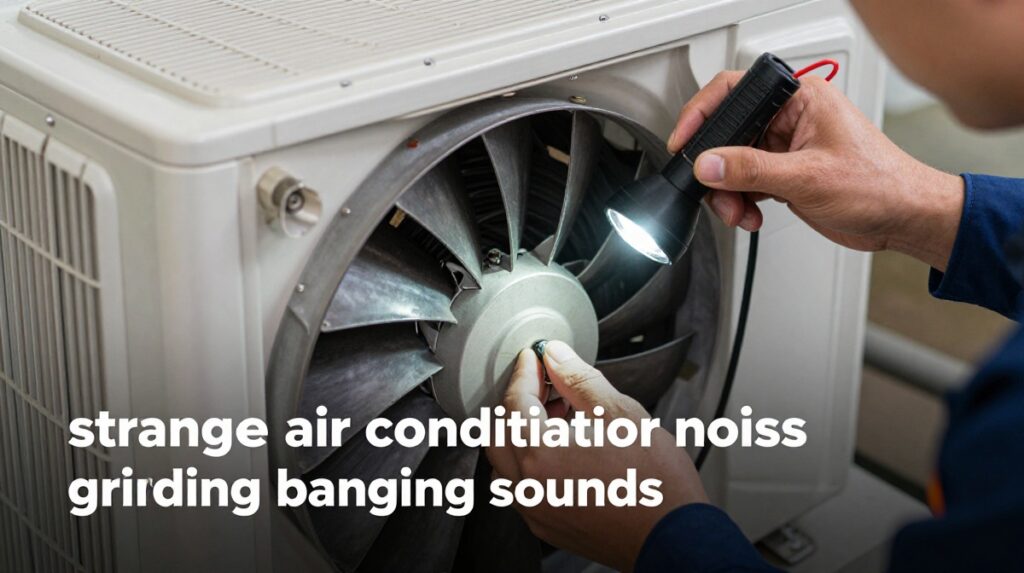
2. It Sounds Like Something’s Breaking
A good AC hums. Soft, steady, boring. That’s exactly what you want.
What you don’t want is banging. Or grinding. Or a squeal that makes the dog leave the room.
Get to know these sounds, because they each mean something.
Grinding or screeching
That metal-on-metal noise usually means a motor bearing’s gone bad. Keep running it and the motor seizes up. Now you’re not buying a cheap bearing, you’re buying a whole motor.
Banging or clanking
Something inside came loose. A rod, a pin, a part that worked itself free. Often it’s the compressor. Shut it down and make the call.
Buzzing
That one’s electrical. Loose wiring, a tired relay, a capacitor about to give out. And electrical issues aren’t the “let’s wait and see” kind. They start fires.
Clicking that won’t stop
A click when it turns on or off, totally normal. But constant clicking? Your relay or thermostat is fighting to do its job.
Easy rule to remember: a new noise means a new problem. Trust your ears on this.
3. The House Just Smells Off
Funny enough, your nose often catches trouble before anything else does. Two smells in particular should get your attention fast.
A burning or hot-plastic smell? Stop. Shut the unit off right now. That’s melting wire insulation or a motor overheating, and both can start a fire. This is not a tomorrow problem.
Then there’s the musty, sweaty-gym-sock smell. That’s mold or mildew growing in the ducts or on a damp coil. Gross on its own. Worse when you realize it’s quietly pumping spores into the air your family breathes all day.
Neither one clears up by itself. They just get nastier.
4. There’s Water Where There Shouldn’t Be
A little puddle around your indoor unit is never just nothing.
Your AC pulls moisture out of the air. That water’s supposed to slip away quietly down a drain pipe. So when you spot it pooling, the drain’s clogged or the pan underneath has cracked.
And here’s the worse version. An oily-looking leak near the lines might be refrigerant. That tanks your cooling and isn’t something you want to be breathing.
Water spreads fast too. Rots drywall, warps the floor, feeds mold. Wipe it up, sure, but then go hunt down where it’s coming from.
5. It Keeps Switching On and Off
This one’s sneaky. People live with it for months without clocking it.
The system fires up, runs a minute or two, shuts off, then kicks back on. Again and again. There’s a name for it — short cycling — and it’s rough on the equipment.
Picture stop-and-go traffic for a car engine. All that starting and stopping wears parts out way faster than just cruising would.
What’s behind it:
- An oversized unit that cools the room too fast, then quits
- Low refrigerant confusing the system into shutting down
- A dirty filter or a frozen coil
- A thermostat stuck somewhere dumb, like right next to a sunny window
Short cycling eats electricity and chews through compressors. Don’t let it ride.
6. Your Electric Bill Went Nuts
Dig out last summer’s electric bill. Hold it up next to this month’s.
Did it jump for no real reason? Same house, same routine, same kind of weather, but somehow the number climbed thirty, forty percent?
Your AC’s the first place I’d look.
A struggling unit works twice as hard for half the result. It runs longer. Pulls more power. And every bit of that lands on your bill, month after month after month.
A sudden spike isn’t bad luck. It’s a symptom. Something inside is failing and dragging the whole system down with it.
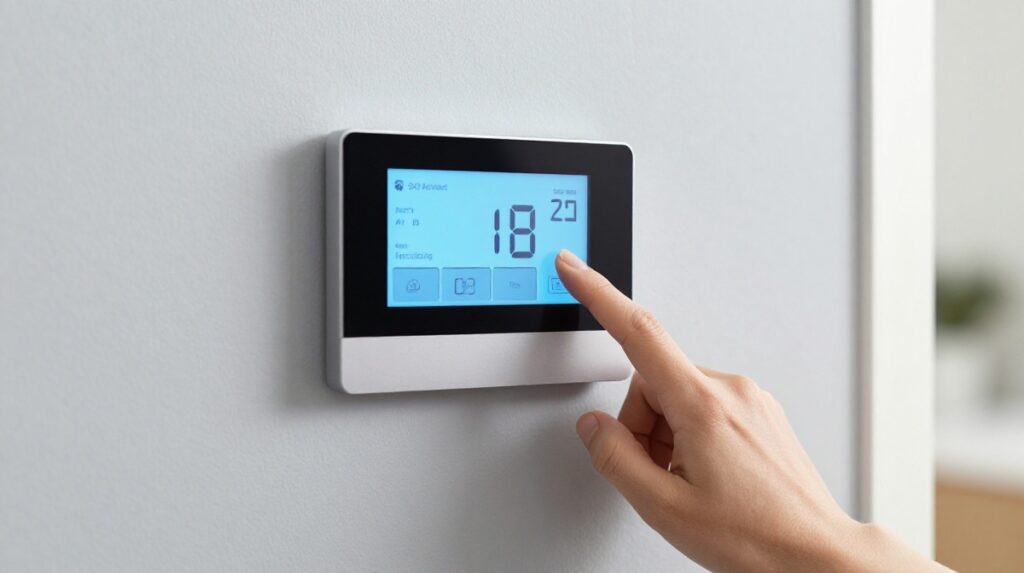
7. The Thermostat Might Be Lying
Sometimes the AC itself is perfectly fine. It’s the little brain on the wall that’s broken.
Tells that point at the thermostat:
- Screen’s blank, or flickering on and off
- You set a temperature and the room never actually gets there
- One room’s freezing, another’s a sauna
- The unit just flat-out ignores what you tell it
Good news here, at least — a bad thermostat is usually one of the cheaper fixes. Bad news is a busted one can make a totally healthy AC act like it’s dying. So rule it out early before you panic.
8. There’s Actual Ice on It
Ice in the middle of summer feels backwards. It’s also a dead giveaway that something’s wrong.
When you see frost or ice building up on the refrigerant lines or the indoor coil, the system’s either choking on bad airflow or running low on refrigerant.
Usual suspects:
- A filthy filter blocking air
- Low refrigerant from a leak
- A weak blower fan
- Closed or blocked vents
And here’s the mistake almost everyone makes. They spot the ice, freak out, and keep the unit running, hoping it’ll melt. That just makes it worse. Shut it off. Let it thaw all the way. Then get it looked at before you fire it back up.
9. The Thing Is Just Old
Age comes for everything eventually. Your AC’s no different.
Most central systems give you ten to fifteen years. Push past that and you’re on borrowed time.
An older unit shows its age in ways you’ll notice. Cools slower. Costs more to run. Parts get harder to track down. And a lot of older systems use refrigerant types that are being phased out, which means a refill can cost a small fortune.
If your AC is older than your teenager, start setting money aside for a new one now. Don’t wait for the funeral.
10. You’re on a First-Name Basis With the Repair Guy
One repair? Sure, that happens to everyone.
But if you’ve called for service two or three times in a single season, something deeper is going on. You’re not really fixing it anymore. You’re paying for life support.
Add up what you’ve spent over the past year. If it’s crept past half the cost of a brand-new system, you’re just throwing good money after bad.
A dying unit nickel-and-dimes you right up until the day it quits for good.
Okay, So What Do You Actually Do?
Spotting the signs is the easy part. Acting on them is what saves your summer. Here’s the plan.
Stuff you can handle yourself
- Swap the air filter. Every one to three months. Honestly, this one habit prevents half the problems on this list.
- Clear around the outdoor unit. Pull the weeds, rake out leaves and grass clippings, give it about two feet of breathing room all around.
- Check your vents. Make sure a couch or rug isn’t sitting on top of one.
- Rinse the condenser coils gently with a garden hose. Power it off first, obviously.
- Flush the drain line. A cup of vinegar poured through keeps it from clogging.
Fifteen minutes, tops. And it can add years to the unit’s life.
When to just call a pro
Some things aren’t worth the gamble. Get a professional out there fast if you notice:
- Any burning smell or sign of an electrical issue
- An oily refrigerant leak
- Loud grinding, banging, or screeching
- Ice that keeps coming back after you’ve thawed it
- The compressor not kicking on at all
And please, don’t go poking around inside if you smell burning or see scorched wires. That’s how people end up in the ER.
Repair It or Replace It? Here’s the Honest Answer
This is the question that keeps people up at night. Let me make it simple.
Lean toward repairing if:
- The unit’s under ten years old
- It’s a one-time, affordable part
- It’s been solid up to now
Lean toward replacing if:
- It’s over twelve years old
- The compressor or coil is failing
- The repair runs half the cost of a new system or more
- Your bills keep climbing no matter what you fix
There’s also a quick trick the trade uses, sometimes called the 5,000 rule. Take the unit’s age, multiply it by the repair cost. If you clear 5,000, replace it. So a ten-year-old unit with a 600-dollar repair lands at 6,000. That’s a replace.
No emotion. Just math.
The Smartest Move: Get Ahead of It
Want to skip this whole headache next year? Book a tune-up every spring.
A tech spends an hour checking refrigerant, cleaning coils, tightening connections, catching the little problems before they blow up into big ones. Costs a bit. Saves a ton.
The best AC repair, after all, is the one you never have to make.
Bottom Line
Your air conditioner isn’t going to blindside you. Not really.
The weak air, the weird noises, the climbing bills, the ice, the smells — those are all just chapters in the same story. And the ending is always the same: a breakdown on the hottest day of the year.
You get to decide how that story goes, though.
So go outside. Listen to it for a second. Check the filter. Hold your hand to a vent. Five minutes today might save you a miserable, sweaty, expensive mess come July.
Don’t wait for it to die on you. It already told you it was sick.