
I bought my first house thinking the hard part was over. Cute.
The hard part was just starting. Six months in, my basement smelled like a pond. The culprit? Gutters I’d never once looked at. That repair ran me about $2,800, and I still think about it when I’m up on the ladder every spring, cursing the maple tree my wife loves.
So this list isn’t theory. It’s the stuff I wish someone had grabbed me by the collar and explained on day one. Ten jobs. Do them. Your future self will thank you, probably while drinking a beer instead of bailing out a flooded crawlspace.

1. Clean Your Gutters
Here’s the thing nobody tells you about gutters. They look totally fine right up until they ruin your week.
Leaves drop. They sit. Add a little rain and you’ve got a soggy salad packed into a metal trough, and water that should be running away from your house starts running down the walls instead. Then it pools by the foundation. And foundations do not forgive.
I do mine twice a year now. Once in spring, once after the leaves finish dropping in November. If you’ve got oaks or maples leaning over the roof, honestly, three times isn’t crazy.
While you’re up there:
- Scoop the muck (wear gloves, trust me, it’s vile)
- Run a hose down each downspout to clear hidden clogs
- Look for spots that sag or pull away from the fascia
- Confirm water exits at least a few feet from the house
One winter, a downspout of mine froze solid. The backup pushed ice up under the shingles and I got a leak right over the kitchen. So yeah. This one’s not optional in cold climates.
One Word on Ladders
Please don’t do something dumb. Hold the ladder, or get a buddy to. Two-story house? Pay a person. The forty bucks beats a hospital visit every single time.
READ MORE Why More Homeowners Are Replacing Old HVAC Systems in 2026
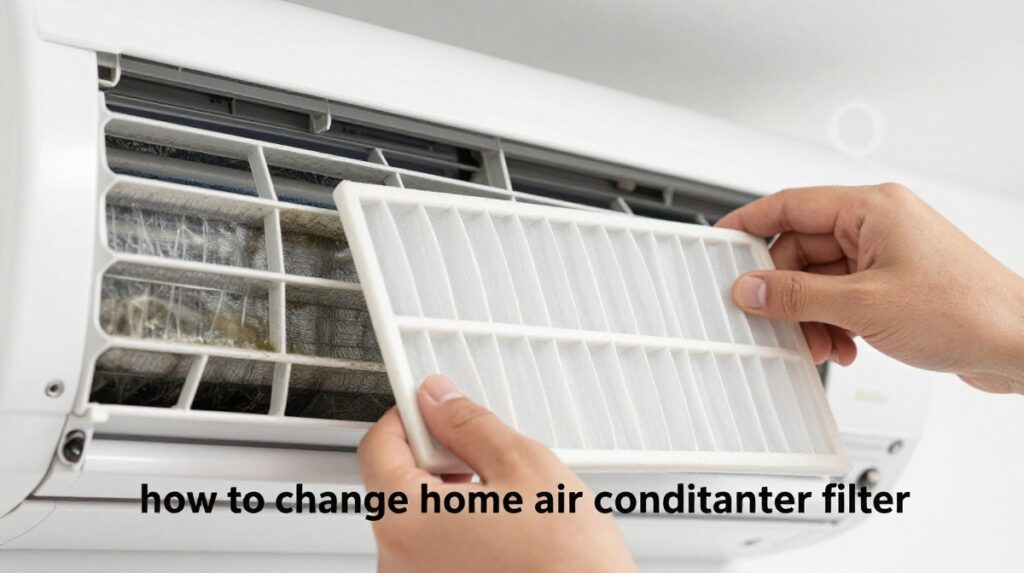
2. Change the HVAC Filter
This is the laziest possible win in home ownership and people still blow it off.
A grimy filter strangles your system. The air can’t move, so the furnace or AC just grinds away, burns extra power, and wears out faster than it should. I’ve watched a friend replace a blower motor that a $9 filter would’ve saved.
Swap it every month or two. If you’ve got a shedding dog and a couple of kids like I do, monthly. No exceptions.
Why bother:
- The air in your house is actually cleaner
- Your electric bill quietly drops
- An expensive machine lives longer
- Less dust on the bookshelves
My trick: buy a six-pack of filters, shove them in the hall closet, and set a recurring phone reminder. The reminder is the real secret. Memory is not to be trusted here.
3. Test Your Smoke and CO Detectors
Forget money for a second. This one is about whether your family wakes up.
A smoke alarm with a dead battery is a plastic decoration. That’s it. And we’ve all done the thing where it chirps at 3 a.m. and we yank the battery out to make it stop. Don’t be that person. I was that person once. Felt like an idiot about it for a week.
Test them monthly. It’s a ten-second job. Push the button, wait for the screech.
The whole routine:
- Press test once a month
- Fresh batteries twice a year (do it when the clocks change, easy to remember)
- Replace the whole unit around the 10-year mark
- Put carbon monoxide alarms near bedrooms and any gas appliance
Carbon monoxide is the scary one. No smell. No color. It just lowers the lights on you. A $25 alarm is the entire thing standing between your family and a tragedy you’d never see coming. Buy the alarm.
READ MORE How Often Should You Service Your HVAC System?
4. Flush the Water Heater
Most folks never lay a hand on their water heater until the day it dumps fifty gallons across the garage floor.
What’s going on inside is simple. Sediment, minerals, and grit settle at the bottom of the tank and just keep piling up. Your heater has to cook right through that crust, which wastes energy and slowly eats the tank from the inside out.
Drain and flush it once a year.
Rough steps:
- Kill the power or gas first
- Hook a garden hose to the drain valve
- Let the cloudy water run until it comes out clear
- Refill, then fire it back up
You’ll notice hotter water faster, and the tank can last years longer. A replacement is north of a thousand dollars installed. The flush costs you an hour and zero money.
If It Rumbles, You Waited Too Long
That popping, kettle-on-the-stove sound? That’s water boiling under all the sediment. Consider it the tank yelling at you. Go flush it.
READ MORE HVAC Maintenance Checklist: 10 Steps to Extend Your System’s Life
5. Look at Your Roof
Your roof eats the weather so you don’t have to. Sun frying it all summer, ice prying at it all winter. And we just… never look up.
So look. Twice a year, plus after any nasty storm. You don’t need to climb. Grab binoculars and stand in the yard like a slightly odd neighbor.
What you’re scanning for:
- Shingles that are missing, curling, or cracked
- Dark streaks or fuzzy patches of moss
- Bent or rusted flashing around the chimney and vents
- A pile of sandy granules collecting in the gutter
One missing shingle is all it takes. Water slips in, soaks the decking, and creeps toward the attic insulation. By the time a brown ring shows up on your bedroom ceiling, the rot’s been working for months. Catch it as one shingle and it’s a cheap afternoon.

6. Seal the Gaps and Drafts
Stand by a window this January. Feel that cold draft sliding across your hand? That’s cash leaving the building.
Little gaps add up to a shocking amount of waste. Around windows, under doors, where the cable line punches through the wall. Your warm air sneaks out, cold air sneaks in, and your furnace runs itself ragged trying to keep up.
A tube of caulk and a roll of weatherstripping cost almost nothing. One Saturday afternoon and you’ll feel the difference.
Where the leaks like to hide:
- The seams of window and door frames
- Holes where pipes or cables enter the house
- Up in the attic, around recessed light cans
- The bottom sweep of exterior doors
Bonus: mice and bugs use these exact same gaps as a front door. Seal them and you solve two problems with one tube of caulk. I’ll take that math any day.
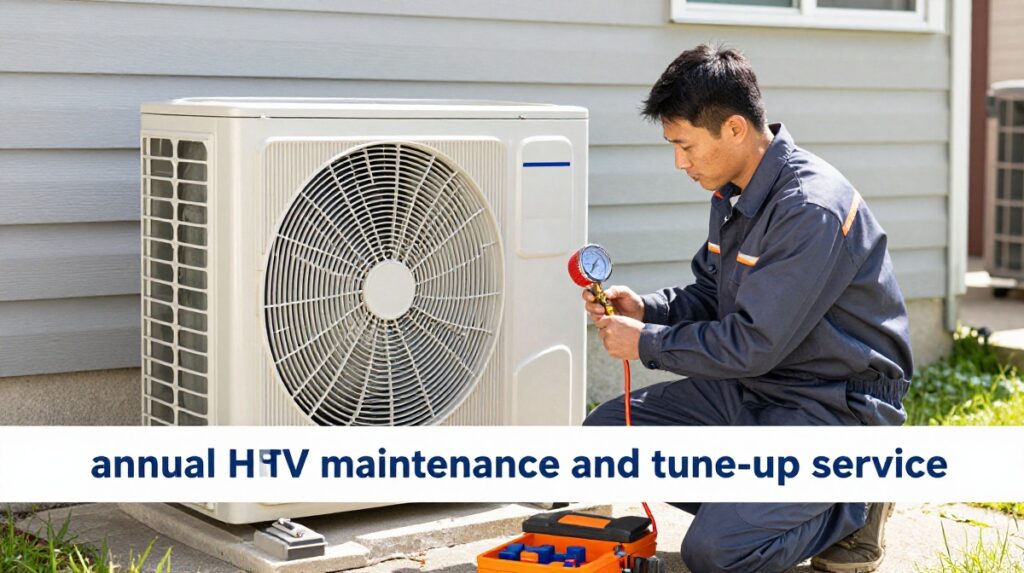
7. Get the HVAC Serviced
Swapping filters is good. It is not the same as a real service, and I learned that one the expensive way.
Have a tech come out once a year. AC in spring, furnace in fall. They’ll spot stuff you simply can’t.
A proper tune-up usually includes:
- Checking the refrigerant charge
- Cleaning the coils and blower
- Tightening and testing electrical connections
- Inspecting the heat exchanger for cracks
That last point isn’t small. A cracked heat exchanger can leak carbon monoxide into your living room. A yearly visit catches it long before it becomes a 2 a.m. emergency. Mine flagged a hairline crack two winters ago. I’d never have known.
Does it cost a bit? Sure. But an AC that quits during a July heat wave will cost you triple and wreck your weekend. Pay the small bill.
Your System Talks
Weird burnt smell. Weak airflow. A clunk when it kicks on. These aren’t quirks, they’re symptoms. Cranking the thermostat and hoping is not a repair strategy. Make the call.
8. Clean the Dryer Vent
This is the one that genuinely creeps me out. And it should creep you out too.
Lint builds up inside the dryer vent, and lint is basically kindling. Pack enough of it into a hot metal tube and you’ve built yourself a small fire hazard right next to the laundry. The fire departments around here run thousands of these calls a year. It’s not rare.
Clean the full vent line at least once a year.
Tells that yours is clogged:
- Clothes need a second cycle to dry
- The dryer body feels hot to the touch
- A faint burning smell mid-cycle
- Lint gathering around the door seal
Clean the lint screen after every load, obviously. But that screen doesn’t catch everything, and the deep vent line is where the real danger collects. A clogged vent also forces the machine to work twice as hard, which means higher bills and a shorter lifespan. So you’re not just buying safety. You’re buying time.
9. Reseal the Deck and Outdoor Wood
Wood and weather have been enemies since forever. Your deck is losing that fight a little every day.
Rain soaks in. Sun bakes it dry. Repeat that cycle for a few years and you get cracking, splintering, and the kind of soft rot that turns a deck board into a trapdoor. I poked a screwdriver into one of mine once and it went straight through. Cool. Great. Love that.
Reseal or restain every couple of years. Easy test: splash some water on it. If it beads up, you’re fine. If it soaks right in, you’re overdue.
Before you seal:
- Sweep off the dirt and leaves
- Scrub down the mildew and flaking old stain
- Swap out any board that feels spongy
- Let it dry completely, then coat it
It’s a weekend. Maybe two if you’re slow and easily distracted, like me. But it tacks years onto something that’s brutally expensive to rebuild from scratch.
Check the Hardware Too
Wood swells and shrinks with the seasons, so screws and brackets loosen over time. While you’ve got the deck cleared off, run a driver over the visible fasteners and snug them back down.
10. Hunt Down Plumbing Leaks
Water is patient. It’ll take its sweet time wrecking your house, quietly, while you’re busy living your life.
A slow drip under the sink looks harmless. It is not. Give it a few months and it’s warped the cabinet floor, grown a colony of mold, and padded your water bill the whole time. Death by a thousand drips.
Walk the house once a month and go looking for trouble.
Spots to check:
- Under every sink
- Around the base of each toilet
- Behind the washing machine, at the hose connections
- Anywhere you spot a stain or catch a musty smell
And learn where your main shutoff valve is. I mean it. When a pipe bursts on a Sunday night, you do not want to be Googling “where is my water shutoff” while the kitchen fills up. Find it today. Make sure it actually turns. Then show everyone else in the house, because you might be the one out of town when it happens.
A toilet that keeps hissing isn’t background noise, by the way. It’s wasting gallons an hour. The fix is usually a flapper that costs less than your morning coffee.

How to Not Get Overwhelmed by All This
Ten jobs reads like a mountain. It really isn’t. Slice it up by season and it nearly disappears into the background of normal life.
Spring: gutters, roof check, AC service.
Summer: reseal the deck, redo the caulking, clean the dryer vent.
Fall: furnace service, water heater flush, gutters again before winter.
All year, on autopilot: test the detectors monthly, change filters every few weeks, glance under the sinks now and then.
Stick it on a calendar. Lean on phone reminders. The goal is to turn this into a quiet habit instead of a string of panicked emergencies.
Why Any of This Is Worth It
Let’s be honest. Nobody dreams about flushing a water heater. It’s tedious, it eats a Saturday, and there’s always something more fun to do.
But neglect always sends a bigger bill. Always.
A clogged gutter becomes a flooded basement. A lint-packed vent becomes a fire. A two-dollar drip becomes a five-figure mold remediation. Every horror story I’ve heard from neighbors started as a small, boring, completely fixable thing that somebody decided to ignore.
The people with houses that just… work? They aren’t smarter or richer than you. They’re consistent. They handle the little stuff while it’s still little.
So go pick one thing off this list this weekend. Just one. Knock out the next one next month. Stack a few of these up and your house stops fighting you.
It’s got your back. Have its.