
Your energy bill keeps climbing. You haven’t changed a thing. So what gives?
Nine times out of ten, it’s your HVAC system. Or more honestly, it’s how you’re treating it. Heating and cooling already eats up roughly half of the average home’s energy use. When something goes sideways, that number balloons fast.
I’ve been around enough furnaces and AC units to know the pattern. People don’t break their systems with one big dramatic mistake. They bleed money slowly. A little here. A little there. Then the bill arrives and they’re stunned.
Let’s fix that. Here are the seven mistakes draining your wallet right now.
Mistake 1: You’re Ignoring the Air Filter
This is the big one. The one almost everybody gets wrong.
A clogged filter chokes your whole system. Air can’t move. Your furnace or AC has to work twice as hard to push the same amount of air through a wall of dust. That extra effort shows up on your bill.
How bad is it? A dirty filter can spike your HVAC energy use by 5 to 15 percent. For doing nothing. For just forgetting.
And it gets worse over time. A starved system runs longer cycles. It overheats. Parts wear out years before they should. I’ve seen blower motors burn out purely because nobody swapped a $12 filter.
Here’s the rule:
- Check your filter once a month. Hold it up to the light. If you can’t see through it, replace it.
- Standard 1-inch filters need changing every 30 to 90 days.
- Got pets or allergies? Lean toward the 30-day end.
- Thicker 4-inch filters last longer, but still check them.
Don’t overthink the fancy high-MERV filters either. A super-dense filter can restrict airflow on older systems and create the exact problem you’re trying to avoid. Match the filter to what your unit can actually handle.
Set a phone reminder. That’s it. That’s the whole fix.
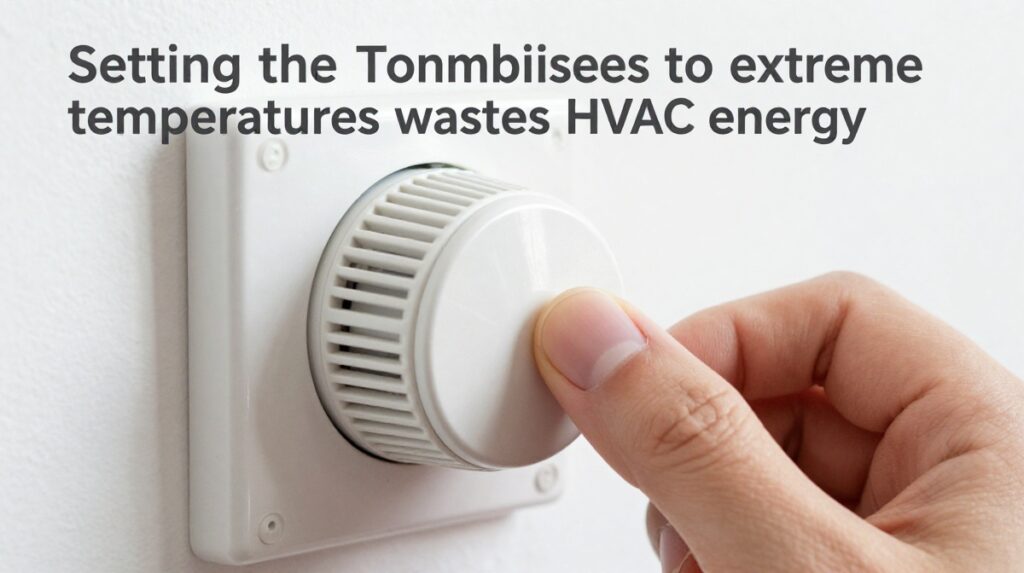
Mistake 2: You Crank the Thermostat to Extremes
Walk into a hot house. You want it cool now. So you slam the thermostat down to 60.
It doesn’t work like that. Your AC cools at one steady speed no matter what number you pick. Setting it to 60 instead of 72 doesn’t cool the room faster. It just cools longer, blows past your target, and runs up the bill.
Same trick in winter. Blasting the heat to 80 won’t warm the room any quicker. It just keeps the furnace running.
Do this instead:
- Pick a comfortable target and leave it.
- In summer, 76 to 78 is the sweet spot when you’re home.
- In winter, aim for 68 when awake.
- Every degree you push past comfort can add a few percent to your bill.
Patience saves money. The room gets there. Let it.
Mistake 3: You’re Closing Vents in Empty Rooms
This one feels smart. It isn’t.
The logic seems solid. Nobody’s in the guest room, so close the vent and stop wasting air on it. Makes sense, right? Wrong. And here’s why it backfires.
Your HVAC system was sized for your whole house. The blower pushes a fixed volume of air. Close a few vents and that air doesn’t vanish. The pressure builds up inside your ductwork instead.
That pressure forces air out through every tiny gap and leak in your ducts. So you lose conditioned air into your attic, your walls, your crawlspace. Places nobody lives.
The strain also hurts the equipment. Higher pressure means the blower fights harder. On AC systems, restricted airflow can even freeze the coil. Now you’ve got no cooling and a repair bill.
Keep your vents open. All of them. If certain rooms are too hot or too cold, that’s a balancing or ducting issue. Closing vents is not the answer.
How Often Should You Service Your HVAC System?
Complete HVAC Maintenance Checklist for Homeowners
Mistake 4: You Skip the Annual Tune-Up
Nobody loves paying for maintenance on something that “works fine.” I get it. But this is penny-wise and dollar-foolish.
An HVAC system loses efficiency every year it goes untouched. Coils get coated in grime. Refrigerant levels drift. Electrical connections loosen. Each small problem nudges your bill up, quietly.
A proper tune-up reverses that creep. A good technician will:
- Clean the condenser and evaporator coils so heat transfers properly.
- Check refrigerant charge, because low refrigerant kills efficiency and the AC.
- Tighten electrical connections and test the capacitor.
- Lubricate moving parts to cut friction.
- Inspect the burner and heat exchanger on the heating side.
A neglected system can lose around 5 percent of its efficiency every single year. A maintained one holds onto most of its performance.
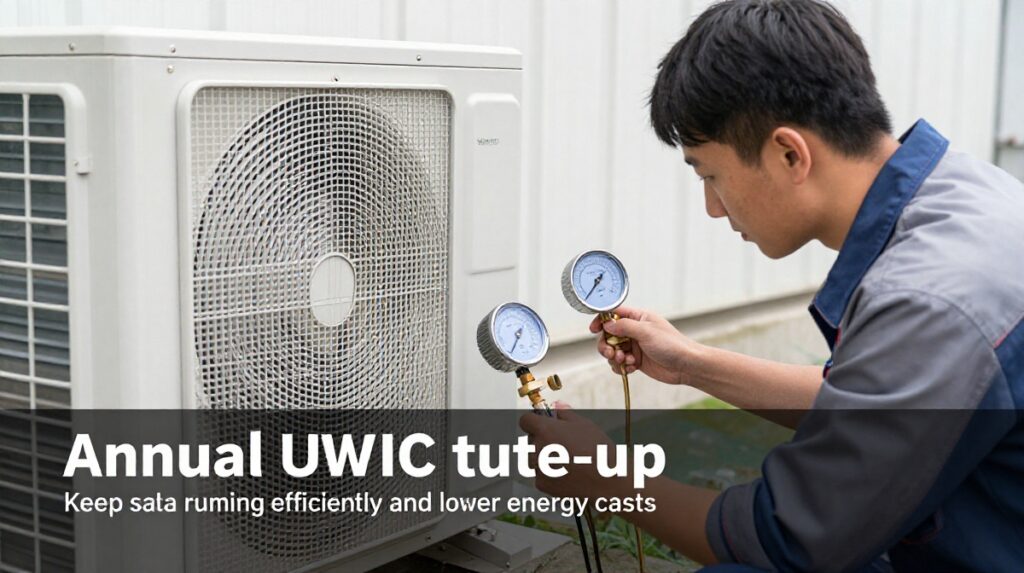
Book it twice a year if you can. Once in spring for the AC. Once in fall for the heat. Catch the small stuff before it becomes a 2 a.m. emergency in July.
Mistake 5: You’re Running the System When Nobody’s Home
This is wasted money in its purest form. You’re paying to cool an empty house.
Most people leave for work, leave for the weekend, and leave the thermostat exactly where it was. Eight hours of cooling rooms that nobody is sitting in. Multiply that across a month and it adds up fast.
The fix is dirt cheap and it pays you back fast.
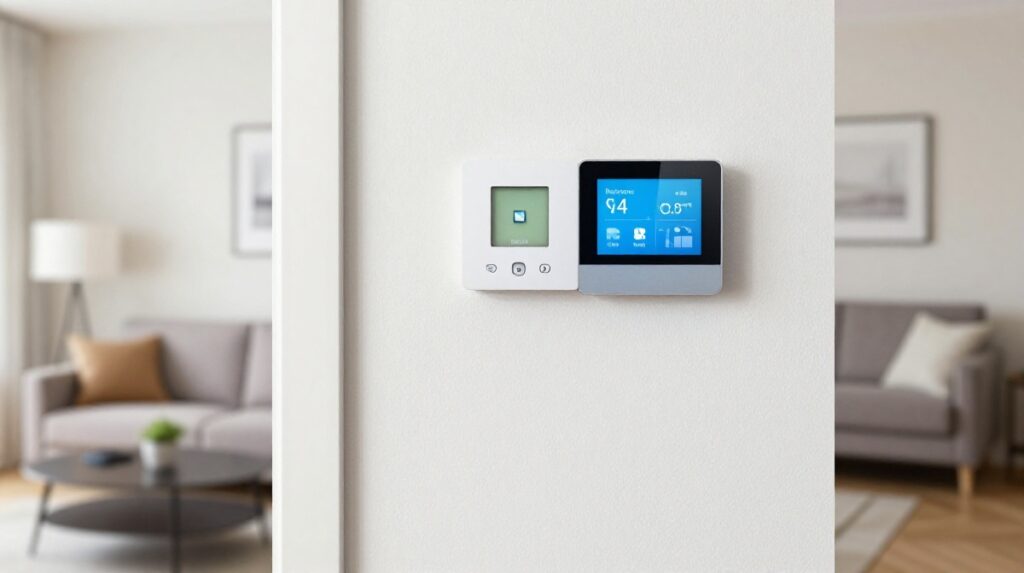
Get a Programmable or Smart Thermostat
A basic programmable thermostat lets you set it and forget it. Bump the temperature up 7 to 10 degrees while you’re at work. Have it return to comfortable right before you walk in the door.
The Department of Energy estimates this habit alone can shave around 10 percent off your heating and cooling costs.
A smart thermostat goes further:
- It learns your schedule.
- It senses when you’ve left using your phone’s location.
- It adjusts on its own, even when you forget.
- Many show you exactly where your energy goes.
The thermostat pays for itself in a season or two. After that, it’s pure savings.
A Quick Word on Setbacks
People worry that letting the house warm up costs more to re-cool. It doesn’t, not for normal absences. A house leaks less heat when the indoor and outdoor temperatures are closer together. The setback wins. Trust it.
Mistake 6: Your Ducts and Home Are Leaking Air
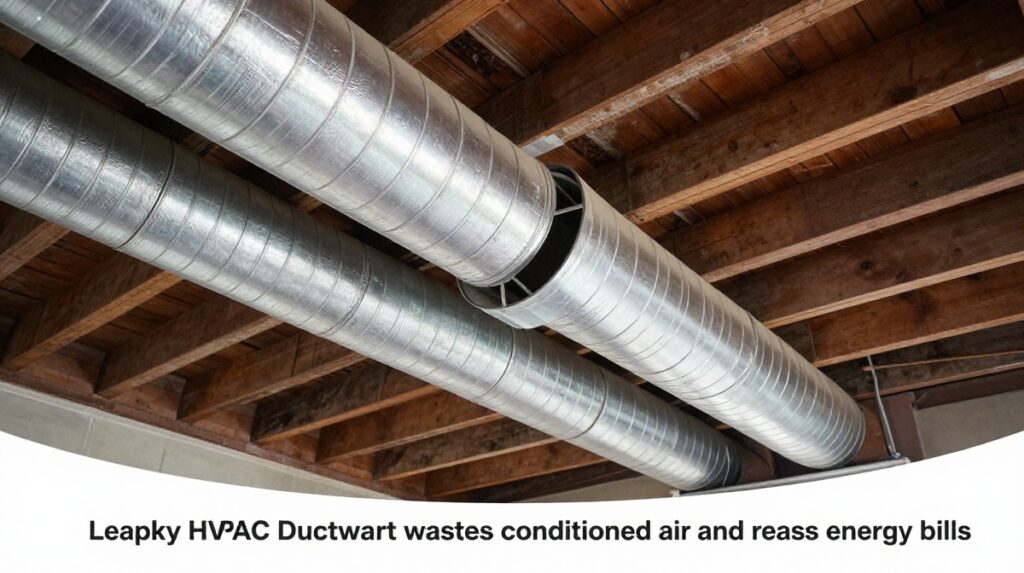
You can do everything else right and still hemorrhage money here. Leaky ducts are the silent killer of HVAC efficiency.
Think about it. Your system makes perfectly cooled air. Then a fraction of it escapes through gaps in the ductwork before it ever reaches a room. The average home loses 20 to 30 percent of its conditioned air to duct leaks.
That’s a third of your effort, gone. Vanished into the attic.
Signs you’ve got a leak problem:
- Some rooms never get comfortable no matter what.
- Your bills are high without an obvious reason.
- You see dust streaks around vents and duct seams.
- Rooms feel stuffy or unevenly heated.
Seal accessible duct joints with mastic or foil tape. Not regular cloth duct tape, ironically, since it dries out and falls off. For hidden ductwork, a pro can run a duct test and seal what you can’t reach.
Don’t Forget the Building Itself
Your ducts aren’t the only leak. Your house breathes through every gap.
- Weatherstrip your doors.
- Caulk around windows.
- Seal gaps where pipes and wires enter walls.
- Add insulation in the attic if it’s thin.
Air sealing and insulation hold the conditioned air inside, where you paid to put it. Combined with duct sealing, this is often the single biggest improvement a homeowner can make.
Mistake 7: You’re Babying a Dying or Wrong-Sized System
Sometimes the mistake isn’t habit. It’s the equipment itself.
Old HVAC systems are energy hogs. A 15-year-old AC might run at a SEER rating of 8 or 10. Today’s efficient models hit 16, 18, or higher. That difference is enormous. You could be using nearly double the energy for the same comfort.
If your unit is pushing 15 years and needs a big repair, do the math. Sometimes the repair money is better spent on a new, efficient system that slashes your monthly bill.
Watch for these warning signs:
- Frequent breakdowns and repair calls.
- Loud or strange noises during operation.
- The system can’t keep up on hot or cold days.
- Bills climbing even though your habits haven’t changed.
- The unit is over 12 to 15 years old.
The Sizing Trap
Here’s a mistake that happens at install and haunts you for years. Wrong sizing.
An oversized AC cools the house too fast, then shuts off. Then kicks on again. This short cycling wears out parts and never removes humidity properly. You feel clammy and cold at the same time.
An undersized unit runs constantly and still can’t keep up.
A good contractor runs a load calculation, called a Manual J, to size the system to your actual home. If your current setup was never sized right, that’s worth fixing.
Give the Outdoor Unit Room to Breathe
One last easy win. Go look at your outdoor condenser right now.
Is it buried in weeds? Crowded by a fence? Smothered in leaves? That unit needs airflow to dump heat. Block it and efficiency tanks.
- Clear at least two feet of space on all sides.
- Trim back plants and bushes.
- Hose off dust and debris gently a few times a season.
- Keep the top clear too.
Two minutes of yard work. Real savings.
Putting It All Together
None of this is complicated. That’s the part that frustrates me. People pay hundreds extra every year for mistakes that take minutes to fix.
So here’s your game plan. Start small. Build from there.
This week:
- Check and replace your air filter.
- Set a recurring reminder to keep doing it.
- Open every closed vent in the house.
- Clear the junk away from your outdoor unit.
This month:
- Set comfortable thermostat targets and stop cranking it.
- Install a programmable or smart thermostat.
- Walk your home and feel for drafts at doors and windows.
This season:
- Book a professional tune-up.
- Have your ducts inspected and sealed.
- Honestly assess whether an aging system is worth keeping.
Your HVAC system is probably the most expensive thing running in your home. Treat it that way. A little attention goes a long way, and the savings show up where you’ll notice them most. On the bill.