
The water heater goes on a Sunday. Of course it does. Never a Tuesday afternoon when the plumber has openings and you’re feeling calm about money. It waits for the worst possible moment, floods a corner of the garage, and leaves you scrolling repair quotes that all seem to put the comma in a place you don’t like.
That’s usually the moment people start typing “home warranty” into a search bar.
And most of them only have a fuzzy idea of what they’re looking at. Plenty of folks assume it’s a kind of insurance. It isn’t. Others figure it covers pretty much anything that goes wrong in the house. Also no. The real answer sits somewhere in the middle, and the details matter a lot more than the brochures let on.
So here’s the plain version. What a home warranty covers, what it’ll run you in 2026, how a claim actually goes once you file, and whether the whole thing is worth your money. No sales pitch attached.
So, What Is a Home Warranty, Really?
Strip away the marketing and the idea is simple. It’s a yearly service contract. When one of your home’s big systems or appliances gives out because it’s old and worn, the warranty company pays to repair or replace it. Your oven stops heating. The AC won’t kick on. A pipe under the sink quits. You file a claim, pay a flat fee, and somebody comes to deal with it.
The word that trips everyone up is “warranty,” because it sounds like insurance, and it just isn’t one. The Federal Trade Commission is blunt about that. As far as the agency is concerned, these are really service contracts, and the rules around them have nothing to do with the homeowners policy your lender made you buy. There’s a formal legal definition too. Cornell Law School’s Legal Information Institute describes a home warranty as a contract that covers the upkeep of major home systems for a set period of time.
Most plans last twelve months and renew on their own each year. You pay a premium, either monthly or in one lump, and then a smaller fee each time you actually use it. Think of it like a subscription, except the product is “when something breaks, a person shows up and handles it.”

Home Warranty vs. Homeowners Insurance (Two Different Animals)
This is the mix-up I run into more than any other, so let me park on it for a second. One line to hang onto: insurance is for disasters, a warranty is for wear.
Your homeowners policy steps in when something sudden and ugly happens. A house fire. A burst pipe soaking the living room. A storm that peels half the roof off. Someone slipping on your front steps and getting hurt. A home warranty won’t touch a single one of those. What it handles is the boring, predictable decline of things you use every day: the fourteen-year-old compressor that finally dies, the dishwasher that won’t drain, the disposal that hums and does absolutely nothing else.
Side by side, it shakes out like this:
| Home Warranty | Homeowners Insurance | |
|---|---|---|
| What it covers | Breakdowns from normal wear and tear | Sudden damage from fire, storms, theft, water, liability |
| Typical items | HVAC, plumbing, electrical, appliances | The structure, your belongings, personal liability |
| Required by lenders? | No, completely optional | Yes, almost always mandatory for a mortgage |
| How you pay | Annual or monthly premium, plus a service fee per claim | Annual premium, plus a deductible per claim |
| What triggers a claim | Something stops working with age and use | A covered event or accident causes damage |
They aren’t competitors. They’re more like roommates. Insurance ignores the furnace that died of old age, and the warranty shrugs at storm damage. If you want to get the insurance half sorted out, our breakdown of what actually makes a home insurance policy worth paying for pairs nicely with this.
What Does a Home Warranty Actually Cover?
Coverage shifts from one company to the next, but nearly all of them sort it into three piles: systems, appliances, and optional extras. You usually pick a pile, or bundle them together.
The Big Systems
These are the expensive, built-in guts of the house. Lose one and you notice within the hour.
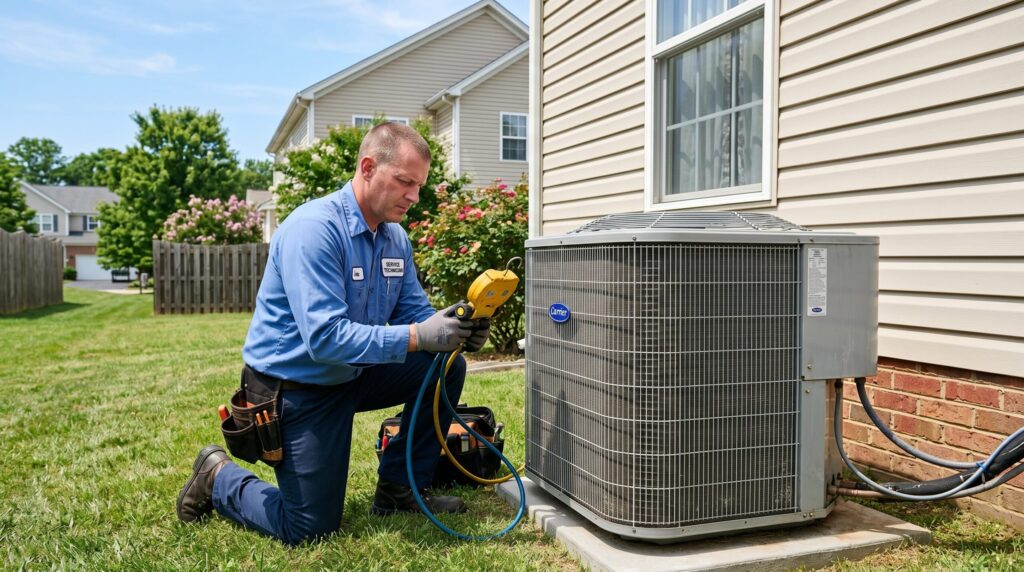
Heating and cooling sits right at the top, and it earns the spot. A full HVAC swap can cost more than a decent used car, which is exactly why it keeps people up at night. If your system is getting up there in age, it’s worth reading why so many homeowners are moving to heat pumps and how the numbers shake out before you’re staring at a dead unit in the middle of August.
Past HVAC, system coverage usually reaches your plumbing (pipes, clogs, valves, leaky faucets), the electrical side (wiring, the panel, breakers, outlets), and the water heater, which happens to be one of the most common claims people file.
The Appliances
The everyday machines you’d miss the second they died:
- The refrigerator
- Your oven, range, and cooktop
- A built-in microwave
- The dishwasher
- Garbage disposal
- Washer and dryer
One thing worth flagging: kitchens keep getting smarter and pricier, so repairs cost more than they used to. If you’re sinking money into the kind of smart-home upgrades homeowners are loving in 2026, keep half an eye on the contract, because some plans cap what they’ll pay toward fancy connected models.
The Add-Ons
Base plans skip a lot, but you can bolt on coverage for whatever’s particular to your place. A pool and spa. A septic system or well pump. Roof-leak repairs. The garage fridge, a chest freezer, that second oven nobody else seems to have. Each one nudges your premium a little higher. A standalone freezer might run you a couple of bucks a month, while a pool-and-spa combo costs real money. Still a fair trade, since you only pay for the stuff your house actually has.
What It Won’t Cover (Please Read This Part)
This is the section the glossy brochures sprint past, and it’s the exact spot where people get burned. A home warranty is a budgeting tool, not a force field. Here’s the usual stuff left out in the cold:
- Anything that was already broken. Pre-existing problems are almost always excluded, so a plan won’t rescue the AC that was already wheezing when you signed.
- Neglect. Skipped your filter changes, never flushed the water heater? Don’t act surprised when a claim gets denied.
- Cosmetic damage. Dents, scratches, rust that doesn’t actually stop the thing from working. Your problem, not theirs.
- Bad past work. A previous owner’s sketchy, not-to-code wiring won’t get a free pass.
- Items still under the manufacturer’s warranty. No point paying twice for the same thing.
- Whatever sits above your cap. Once you hit the dollar limit on a claim, the rest of the bill is yours.
That last one quietly decides whether your plan saves the day or lets you down, so hang onto it.
What Does a Home Warranty Cost in 2026?
Let’s talk actual dollars. Three pieces make up the price: the premium that keeps the plan alive, the fee you pay per claim, and any add-ons you stack on top.
In 2026, most people land somewhere between $30 and $90 a month, with the national average hovering in the high-$60s to low-$70s. Annualized, that’s roughly $350 to $900 for a standard plan. The loaded-up versions, the ones with high limits and a pile of extras, can sail past $1,200.
| Plan Type | What It Covers | Typical Monthly Cost (2026) | Typical Annual Cost |
|---|---|---|---|
| Appliance-only | Kitchen and laundry appliances | $30 – $50 | ~$360 – $600 |
| Systems-only | HVAC, plumbing, electrical, water heater | $35 – $60 | ~$420 – $700 |
| Combination (comprehensive) | Both systems and appliances | $50 – $90+ | ~$600 – $1,200+ |
| Add-ons (per item) | Pool, septic, well pump, extra fridge | +$3 – $30 each | varies |
What you actually get quoted depends on your home’s size, where it sits, and how much coverage you want. Same plan, two cities, two prices. A place where labor runs expensive will quote higher than somewhere cheaper. It’s literally tied to your ZIP code.
And if you’re trying to size up what it really costs to run a home, a warranty is just one line on a long list. Our cost guides walk through the rest.

The Service Call Fee
Every time you file and a tech rolls up, you pay a flat service fee. Some companies call it a trade fee. In 2026 that’s usually $75 to $150 a visit, averaging right around a hundred bucks. It works like a copay at the doctor’s office. You owe it whether or not the item gets fixed that day, and in some cases even if the claim ends up denied.
Here’s a detail people miss. A lot of companies let you set that fee yourself when you sign up. Pick a higher fee and your monthly premium drops. Pick a lower one and the premium climbs. Planning to file a few times a year? The low fee usually wins. Barely going to touch the plan? Go high and pocket the savings.
Coverage Caps (The Fine Print That Bites)
If you check one thing before signing, check this. Every plan caps what it’ll pay per item, and often per year on top of that. Say your contract limits HVAC to $2,000. Your system needs an $8,000 replacement. The warranty hands over its two grand and waves goodbye to the other six. Suddenly “covered” means something a lot smaller than you pictured.
Plans also tend to depreciate older items, so a tired appliance might only get a partial payout toward its replacement. None of this makes a warranty a rip-off. It just means the caps are not optional reading. A plan that costs a little more but comes with roomy limits will usually beat a cheap one that nickel-and-dimes you when it counts.
How a Claim Actually Plays Out
When something breaks, the steps are pretty predictable:
- Something quits. The dishwasher won’t drain.
- You file. Phone, app, or website, usually at any hour.
- You pay the service fee. That flat per-visit charge.
- A tech gets sent out. The company pulls a contractor from its network.
- They diagnose it. Figure out what’s wrong and whether your plan covers it.
- It gets fixed or replaced. If it’s covered and under your cap, the warranty picks up parts and labor beyond your fee. Can’t be fixed? You typically get a replacement, minus any depreciation.
Picture it in real life. Your fridge dies on a Saturday morning. You file online over coffee, pay your hundred-dollar fee, and a tech shows up Monday. The compressor is toast, no fixing it, so the plan green-lights a replacement up to its limit. You walk away with a new refrigerator for a sliver of retail. The catch, and there’s always a catch, is that this only works if the failure was honest wear and you’d kept up with basic maintenance. That little condition is where claims live or die.
So, Is It Actually Worth It?
This is where most guides go soft and dodge the question. I’ll answer it. Whether a home warranty pays off really comes down to two things: how old your stuff is, and how badly a surprise bill would hurt.
It tends to make sense when your home is on the older side and the systems and appliances are creeping toward the end of their run. Same if a sudden $5,000 repair would genuinely sting, or if the thought of vetting and chasing down contractors yourself makes you tired just reading it. Buyers and sellers lean on warranties too, one to sweeten a deal and the other for a little reassurance. And some people just sleep better with a known, budgetable cost instead of a gamble.
It’s probably a pass if your home is new or freshly renovated and everything is still under a builder’s or manufacturer’s warranty. Same goes if you’ve got a healthy emergency fund and a big repair wouldn’t faze you, or if you’re handy and already handle most of your own fixes.
Now the honest math. In a quiet year where nothing breaks, you’ll likely spend more on the warranty than you ever get back, and that is completely normal. The payoff shows up in the bad year. The one where the AC and the water heater both quit inside a few months, and one plan turns a brutal bill into a couple of service fees. It’s protection against the worst case, even if, technically, it isn’t insurance.

How to Pick a Provider Without Getting Burned
Plans aren’t equal, and neither are the companies behind them. Almost every horror story you’ll read online traces back to a surprise that a careful buyer could have caught up front. Run through this before you commit:
- Actually read the contract, not just the sales page. The limits, exclusions, and claim rules are the real product you’re buying.
- Compare caps, not just premiums. A cheap plan with a $1,500 HVAC limit can cost you more than a pricier one capped at $5,000.
- Look at the service-fee tiers and pick the one that fits how often you expect to file.
- Ask flat out how denials and depreciation work, and what happens when a covered item can’t be repaired.
- Check the contractor network. Are there decent techs in your area, and can you use your own?
- Get three to five quotes. Similar coverage can swing by a few hundred dollars a year.
- See how your state regulates these. The reputable outfits are licensed and upfront about it.
- Mind the waiting period. Coverage usually starts about 30 days after you buy, or at closing in a sale, so a plan won’t cover something that breaks the day after you sign.
The Bottom Line
A home warranty isn’t a scam, and it isn’t a miracle either. It’s a way to swap the gamble of unpredictable repair bills for one steady, known cost. For an older home with aging systems, or for anyone who’d rather not get blindsided by a four-figure invoice, it can be money well spent. For a newer place with a fat emergency fund, it might be money you don’t need to part with.
Match the plan to your home’s age and your own stomach for risk. Read the caps and the exclusions before you sign your name. Do that, and a home warranty stops being a mystery and turns into a tool you actually understand and can use when you need it. That’s really the whole thing.
FAQ SECTION
Is a home warranty the same as homeowners insurance? No, and the difference matters. Insurance covers sudden trouble like fire, storms, theft, or a burst pipe, and your lender almost certainly requires it. A home warranty is an optional service contract that covers your systems and appliances when they wear out and break down. You’ll usually want both, since they protect against completely different things.
How much does a home warranty cost per month in 2026? Most homeowners pay $30 to $90 a month, with the average sitting in the high-$60s to low-$70s, or roughly $350 to $900 a year. On top of that, expect a service fee of about $75 to $150 every time a technician comes out.
What does a home warranty not cover? Plans typically skip pre-existing problems, breakdowns caused by poor maintenance, cosmetic damage, code violations, badly installed equipment, and anything still under a manufacturer’s warranty. They also cap how much they’ll pay per item and per year, so any cost above that limit lands on you.
Is a home warranty worth it for an older home? Often, yes. If your systems and appliances are aging and a sudden multi-thousand-dollar repair would hurt, a warranty turns those unpredictable hits into a steady cost. The real value tends to show up in the year something big finally fails.
Do you need a home warranty when buying a house? No. Nothing requires one, not your lender and not the law. Mortgage lenders insist on homeowners insurance, but a warranty is entirely your call. Sellers sometimes throw one in to sweeten a deal, and buyers sometimes ask for it.
How long does home warranty coverage last? Most plans run twelve months and renew each year. Coverage usually kicks in around 30 days after you buy it, or on closing day if it’s part of a home sale, so it won’t help with something that breaks right after you sign.
Can a home warranty claim be denied? Yes. The common reasons are a pre-existing condition, skipped maintenance, improper installation, or getting repairs done without the company’s sign-off first. Reading your contract and keeping up with basic upkeep are your best defense against a denial.
Does a home warranty cover a full HVAC replacement? Not always. It hinges on your coverage cap. If the plan limits HVAC to $2,000 and the replacement runs $8,000, you cover the gap. Check the cap before you assume the whole system is taken care of.