
Not the dreamy “save the planet for free” pitch. The real number, the one on the contract, with all the little fees nobody mentions until you’re squinting at page four. I’ve helped enough people through this to know that the price tag is where excitement turns into sticker shock. So let’s take the shock out of it.
Here’s everything that goes into the cost, what’s worth paying for, and where you can shave it down.
Table of Contents
- The Short Answer on Cost
- What Actually Drives the Price
- The Full Cost Breakdown
- System Size and Your Bill
- Cash, Loan, or Lease?
- The Incentives That Cut the Cost
- Hidden Fees to Watch For
- How to Pay Less Without Cheaping Out
- Key Takeaways
- FAQ
- Wrapping Up
READ MORE How to Install Solar Panels on Your Home in 2026
READ MORE Smart Home Upgrades That Homeowners Love in 2026
The Short Answer on Cost
You’re busy, so here’s the headline.
In 2026, a typical home solar system runs about $2.50 to $3.20 per watt before incentives. For a standard 8 kW setup, that lands somewhere around $20,000 to $26,000 installed.
After the federal credit and local rebates? Plenty of homeowners pay well below that. Some land closer to $14,000 to $18,000 net.
But averages are slippery. Your real number depends on a handful of things. Let’s get into them.
What Actually Drives the Price
Two identical houses on the same street can get wildly different quotes. Here’s why.
- System size. Bigger systems cost more total, but often less per watt.
- Panel quality. Premium panels squeeze more power from less roof. You pay for that.
- Roof complexity. Steep, multi-angle, or three-story roofs cost more to work on.
- Your location. Labor and permit fees swing hard by region.
- The installer. This is the big one. Marketing-heavy companies bake fat margins into every quote.
That last point matters more than people think. A chunk of your price isn’t hardware at all. It’s sales overhead.
The Full Cost Breakdown
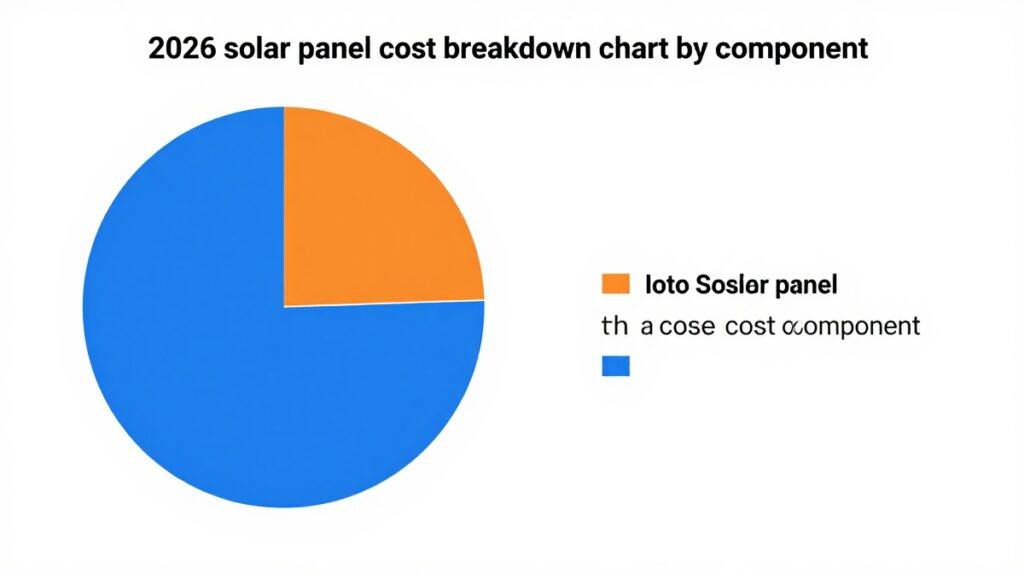
Here’s where your money actually goes on a typical install.
| Cost Component | Approximate Share | Rough Dollar Range (8 kW) |
|---|---|---|
| Panels | 25–30% | $5,000–$7,800 |
| Inverter(s) | 10–15% | $2,000–$3,900 |
| Mounting & racking | ~10% | $2,000–$2,600 |
| Labor | 15–20% | $3,000–$5,200 |
| Permits & inspection | 5–10% | $1,000–$2,600 |
| Soft costs & profit | 20–25% | $4,000–$6,500 |
Look at that bottom row again. A fifth of your bill is soft cost. That’s the most negotiable money in the whole deal, and it’s exactly why you get three quotes. Always three.
System Size and Your Bill
Size isn’t about ego. It’s about your actual electricity use.
Pull up a year of power bills. Add up the kilowatt-hours. That number, plus your local sunlight, tells an installer how big to build. Rough guide:
- Small home, low usage: 4–6 kW, roughly $11,000–$19,000 before incentives.
- Average home: 7–9 kW, roughly $18,000–$28,000.
- Large home, high usage: 10–14 kW, roughly $26,000–$42,000.
Don’t oversize “just in case.” You’re paying for panels that may never earn their keep. Build for your real numbers, not a salesperson’s wish list.
Cash, Loan, or Lease?
How you pay changes the math more than people expect.
- Cash. Highest upfront, lowest lifetime cost, best payback. You own everything and keep every incentive.
- Solar loan. Spread the cost out, still own the system, still claim the tax credit. Watch the interest, though, since a low “dealer fee” loan often hides a higher system price.
- Lease or PPA. Little or no money down, but a third party owns the panels. You get smaller savings and you don’t get the tax credit. Easiest, least lucrative.
My honest lean? Cash if you can swing it, a fair-rate loan if you can’t. Leases make sense for some folks, but read every line.
The Incentives That Cut the Cost
Now the part that softens the blow.
The big one is the federal clean energy credit, which knocks a real percentage off your system cost. I won’t print an exact figure, because tax law shifts and I don’t want you banking on a stale number. Confirm the current rate with the IRS or a tax pro.
Then go hunting for:
- State and local rebates — they vary enormously by where you live
- Net metering credits — payment for the extra power you send back
- SRECs — tradeable certificates in some states
- Property tax exemptions — your home value rises, your tax bill doesn’t follow
Stack a few of these and your payback period can drop into the six-to-eight-year range. After that, the power’s basically free.
Hidden Fees to Watch For
This is the section the slick salespeople hope you skip.
- Dealer/financing fees baked silently into the system price.
- Panel upgrade fees for “premium” gear you may not need.
- Main panel upgrade if your electrical panel can’t handle the system. Real, but get a second opinion.
- Roof reinforcement charges that sometimes get padded.
- Monitoring subscriptions billed monthly forever.
None of these are automatically scams. But every one is a line you should question before you sign.
How to Pay Less Without Cheaping Out
You can trim the cost without buying junk. Here’s how.
- Get three quotes. Minimum. I will not stop saying this. The spread is shocking.
- Compare price per watt, not just the total. It’s the only apples-to-apples number.
- Buy the right size, not the biggest.
- Skip the battery unless you truly need backup or have lousy net metering.
- Time your purchase around incentive deadlines and end-of-quarter installer pushes.
- Read the loan terms as carefully as the system specs.
Cheap labor is where I draw the line, though. Your panels last 25 years. A bargain crew that botches the flashing will cost you far more than they saved.
Key Takeaways
- Expect roughly $20,000–$26,000 before incentives for a standard 8 kW system in 2026.
- After credits and rebates, many homeowners pay closer to $14,000–$18,000.
- Soft costs and profit make up a fifth of the price and are the most negotiable.
- Cash or a fair-rate loan beats a lease for total savings.
- Compare price per watt across three quotes before signing anything.
FAQ
How much do solar panels cost for an average home in 2026? Around $20,000 to $26,000 before incentives for a typical 7–9 kW system. After the federal credit and local rebates, the net cost is often noticeably lower.
How long until solar pays for itself? For most homeowners, somewhere between six and ten years, depending on your local rates, sunlight, and incentives. After that, you’re essentially generating free power.
Is it cheaper to buy or lease solar panels? Buying, almost always, over the system’s lifetime. You own the panels and keep the tax credit. Leasing is easier upfront but leaves a lot of savings on the table.
Does a battery add a lot to the cost? Yes, usually $8,000 to $15,000 extra. It’s worth it if you have frequent outages or weak net metering, and skippable for many other homeowners.
Will solar prices keep dropping? Hardware has trended cheaper for years, though the curve has flattened. Waiting for a big price crash often costs more in lost savings than you’d gain, since you keep paying full electric bills in the meantime.
Wrapping Up
Solar isn’t cheap. But it’s rarely as scary as that first quote makes it look.
Know your usage. Understand the line items. Question the soft costs and the hidden fees. Get your three quotes and compare them by price per watt, not by whoever has the friendliest rep. Do that, and you’ll spend thousands less than the neighbor who signed with the first company that knocked.
Then you’ll spend the next twenty years watching a tiny power bill and feeling pretty smart about it.