
So my neighbor Dave — the guy who once told me smart doorbells were “surveillance you pay for” — texted me a video last week. It was his mailman. Waving at the lens. Dave’s caption: “lol he knows it’s there now.”
Three months before that, somebody walked off with a package from his porch. That was it. That was the whole conversion. The privacy speech, the I’ll-never-do-it routine, all of it gone in one stolen Amazon box.
I think about Dave whenever people ask if this stuff is worth it in 2026, because he basically is the trend. The gear got cheap. It got easy. And it quietly won over the exact people who swore they’d never touch it.
It wasn’t always like this. Remember when a “smart home” meant four apps, two hubs, and a light bulb that flat-out refused to talk to your phone? We’re mostly past that. The upgrades catching on this year aren’t gadgets for the sake of gadgets. They save you money, or time, or that very specific misery of standing in the rain fishing for your keys.
The boring thing that makes the fun stuff work
Stay with me thirty seconds, because this is the reason 2026 feels different from every year before it.
There’s a standard now called Matter. Apple, Google, Amazon, Samsung — they all signed on. In plain English, gadgets from rival brands finally cooperate. Your lock, your bulbs, your sensors, all in one app. No closet shrine of dead hubs.
And it keeps getting better. A version called Matter 1.5 landed at the end of 2025 and added cameras, some smart-garden gear, and — the part nobody put on a billboard but should have — much smarter energy tracking.
So here’s the one word to carry into the store: Matter. See the badge, you’re probably fine. Don’t see it, ask why not. That little logo is the line between a device that lasts and one that’s landfill by 2028.
Right. Enough plumbing talk.
READ MORE Why Half of America Is Suddenly Switching to Heat Pumps
READ MORE 9 Home Security Mistakes That Make a Burglar’s Job Way Too Easy
The ones people rave about
The thermostat. If you buy a single thing, buy this. It learns your hours, backs off when you’re out, and shaves maybe 10 to 15% off heating and cooling while you do nothing. Mine earned its price back before the first winter ended. It’s dull. Dull is the point. Dull means it’s quietly working.
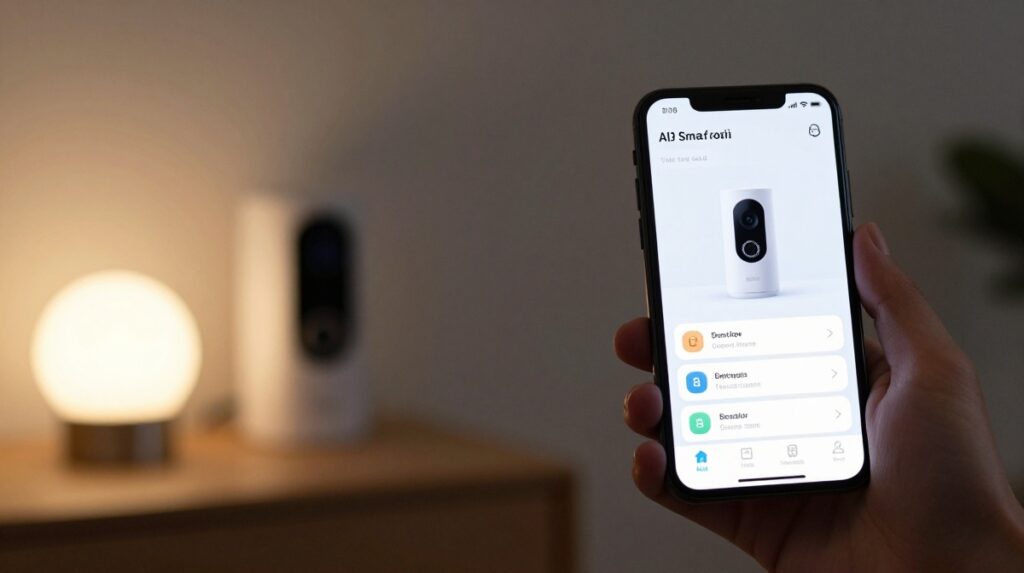
The video doorbell. (See: Dave.) The 2026 ones got clever — the camera tells a person from a car from a package from the raccoon casing my bins, so you’re not drowning in pointless pings. They also stopped looking like hardware bolted to a bank wall. Slim now. They sort of vanish into your trim.
The lock. Sounds nerve-racking until you live with one for a week, and then there’s no going back. Buzz the dog walker in from the couch. Hand the plumber a code that dies Friday at five. Most of them clamp onto the deadbolt you already own — ten minutes, one screwdriver, zero locksmith.
The robot vacuum. Look, it won’t fix your life. But walking into clean floors you didn’t touch? Small, real joy. The new ones empty themselves and mop, and they’ve mostly quit strangling on phone cords under the bed. Pet owners, especially, completely lose it over these.
The lights. Forget rewiring fixtures. It’s mostly just bulbs or tiny kits now. The hook isn’t the app, it’s the automation — lamps fading up at dusk, one tap for “movie night,” a hallway that glows soft at 2 a.m. so nobody cracks a shin on the coffee table. That last one? Guests always ask about it.

Your assistant got a lot less dumb
This one you notice the second you use it.
The voice assistants leveled up hard this year. That stiff “sorry, I didn’t catch that” routine is finally fading. The new wave — Alexa+, Samsung’s hub, the rest — you talk to it like a person. Trail off mid-thought, change your mind, fire a follow-up, and it keeps the thread. It also builds routines on its own instead of forcing you to hand-program every if-this-then-that.
A lot of it now lives on a little wall screen. Control panel, family calendar, recipe holder, intercom, all in one. Bit by bit it becomes the brain of the place and you stop pulling out your phone for everything.
The upgrade nobody brags about (but should)
Energy management. I know. Fight the urge to skim.
That same Matter 1.5 update did something sneaky-useful — it turned plain smart plugs and appliances into things that track exactly what they’re drawing and push the heavy usage toward the cheaper hours. Add a smart hermostat and a couple of monitored plugs and suddenly you can see where the money’s leaking out of the walls.
Got solar or a home battery? This is the missing piece. Bank the cheap power, spend it when rates spike. If you want one goal for the whole year, make it “cut your power bill without ever thinking about it.” This is the route.
Don’t sleep on the unglamorous ones
Some of the best buys sound deathly boring. Hear me out.
The garage door. Yawn, I know. Except replacing it is one of the highest-return projects on the outside of a house — around a 268% return — and you can clip a smart hub onto your existing opener so you quit doing that three-mile U-turn to check if you left it open.
Water-leak sensors. Twenty bucks. You shove one under the water heater and behind the dishwasher and forget it exists, right up until the day it shrieks before a slow drip becomes a $14,000 floor. Cheapest peace of mind in the building.
And, oddly, the bathroom. The 2026 spa-bathroom thing leans smart too — heated floors on a timer, a shower you warm up from bed, a toilet with a built-in bidet. Frivolous? Totally. People still get attached scary fast.
The ones I’d pump the brakes on
A roundup that pretends everything shiny is worth buying is lying to you. So here’s where I’d keep my wallet shut.
Smart fridges — the ones with the giant screen and the cameras peeking at your groceries. Gorgeous in the showroom. In real life you’ll use the “check your milk from the store” trick maybe twice, and you paid a four-figure premium for a touchscreen that’ll feel ancient long before the compressor dies. Buy the good plain fridge. Toss a $30 camera in it if you really must.
AI ovens that swear they’ll “take the guesswork out of dinner.” A few are legitimately clever. Most are a normal oven with a camera bolted on and a subscription nudge waiting in the app. If you cook constantly and hate hovering over a roast, sure, look at one. For the average kitchen that money goes further elsewhere.
Then there’s the real trap: automating something that wasn’t bothering you in the first place. Motorized blinds are a small miracle on a window you can’t reach. On the one you stroll past ten times a day? Pointless. Before anything goes in the cart, ask what irritation it actually kills. If the truthful answer is “none, but it looks cool,” set it back down.
One more, because it sneaks up on people — the subscriptions. A lot of 2026 gear hides the good parts (longer video history, the smarter alerts) behind a monthly fee. Do the math up front. A $60 camera that needs $8 a month to be worth owning is really a $156 camera in year one. Read that fine print at the shelf, not after you’ve unboxed it.
What I’d tell a friend before they spend a dime
Pick one ecosystem. Apple, Google, or Alexa — go with whatever phones your house already runs on. Trying to straddle all three is how people end up frustrated and Googling at midnight.
Start small. One thermostat. One doorbell. One lock. Live with them a month before buying more. You’ll figure out what you really use versus what looked slick in some review.
Check for that Matter badge. Every single time. Closest thing to future-proofing money can buy.
And give privacy a thought. Cameras and mics are handy, but know what each one keeps and where it ships it. Plenty of 2026 gear stores recordings on the device instead of the cloud — for most people that’s the safer default.
So, is it worth it?
The smart home stopped being a hobby somewhere along the way. It’s just the house now. Cheaper gear, brands that finally play nice, and the upgrades people love are the quiet ones — the stuff that melts into the background and makes a plain Tuesday a little smoother.
You don’t need the whole catalog. Get the thermostat that trims the bill. The doorbell that minds the porch. The lock that frees you from your keys. Nail those three and the rest tends to fall into place on its own.
Your house can do more for you than it ever could. The only real question is which daily annoyance you delete first.
Ask Dave. He’ll talk your ear off about it now.
Frequently Asked Questions
What’s the best first smart home upgrade to buy?
A smart thermostat, no contest. It saves real money — often 10 to 15% on heating and cooling — runs quietly in the background, and earns its price back faster than almost anything else here.
Do I need a hub for smart home devices in 2026?
Usually not anymore. Thanks to the Matter standard, plenty of devices connect straight through your phone or a single display. Just look for the Matter badge so nothing strands you down the line.
Are smart home devices worth it, or just hype?
The useful ones are worth it. Thermostats, locks, doorbells, and water-leak sensors all earn their keep day to day. The trap is buying for the novelty instead of for a real need — that’s where people waste money.
Are smart home devices a privacy risk?
They can be, so shop with your eyes open. Favor devices that store data locally instead of in the cloud, skim each app’s permissions, and stick with brands that have a clean security record.