
Let me guess why you’re here. Something feels off with your heating or cooling. Or maybe nothing’s wrong yet, and you want to keep it that way.
Either way, smart move.
I’ve been around HVAC systems for years. I’ve watched cheap units outlive expensive ones. I’ve watched brand-new systems die young. And almost every single time, the difference came down to one boring thing nobody wants to deal with. Maintenance.
Here’s the part most people learn too late. Your HVAC is the priciest appliance in the house, and it’s also the one you ignore the most. We baby our phones. We change the oil in our cars. That big metal box outside? We forget it exists until it quits on us.
This guide changes that. Below are the exact ten steps I’d hand my own family. Some take five minutes. A couple you’ll pass to a pro. All of them buy you years and save you cash.
Why HVAC Maintenance Actually Matters
Fair question. Life is busy. Why add one more chore to the pile?
Because the math gets brutal when you skip it. A neglected system works harder, drinks more electricity, and breaks at the worst moment possible. Picture a July heatwave. Picture a January cold snap. That’s exactly when systems fail and repair prices climb.
A maintained unit runs lean. It sips power instead of guzzling it. And it often lasts fifteen, even twenty years. The neglected version is usually dead by year ten.
The Money Quietly Leaking Out of Your Wallet
Most of the cost of skipping upkeep is invisible. It hides inside your monthly bill.
A dirty filter alone can push your energy use up by a real margin. A low refrigerant charge makes the compressor grind for hours on a job it should finish fast. You never see that waste. You just pay for it, month after month.
Then there’s the warranty trap. Most manufacturers demand proof of annual professional servicing to honor their coverage. Skip the tune-ups, and a denied claim leaves you paying full price for a part that should have been free.
So maintenance isn’t really a cost. It’s the cheapest insurance you’ll ever buy.
The Complete 10-Step HVAC Maintenance Checklist
Here’s the full routine. Work through it once, and you’ll know exactly what your system needs and when.
Step 1: Change the Air Filter
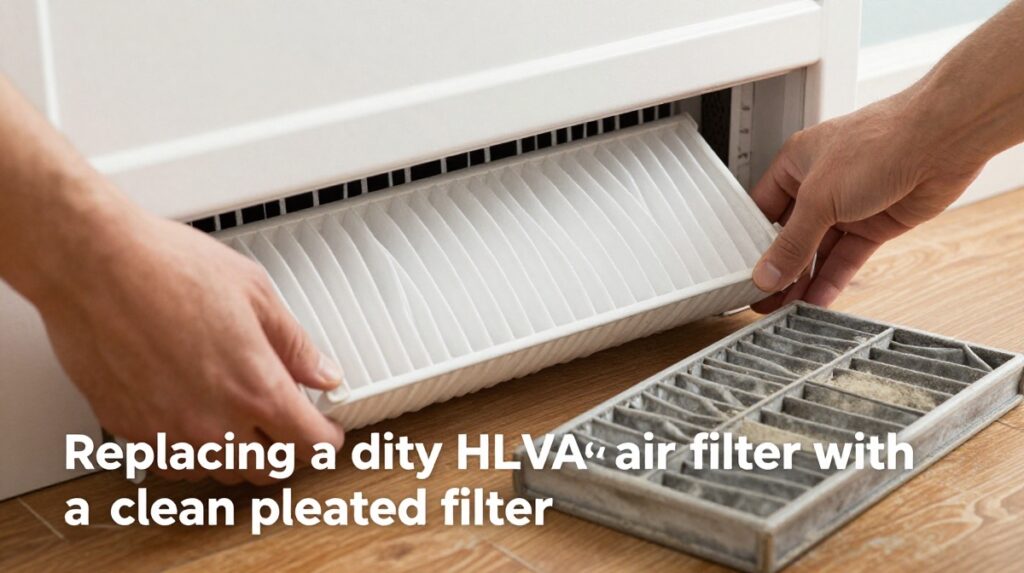
If you do nothing else on this list, do this one. A clogged filter is behind a shocking number of breakdowns.
Think of the filter as your system’s lungs. When it cakes up with dust, pet hair, and grime, the unit fights for every breath of air. That strain wears out the blower motor and chokes your airflow.
Check it monthly. Hold it up to a light. Can’t see through it? Replace it.
- Pets or allergies: every 30 days
- Average home: every 60 to 90 days
- Low-use property: every 90 days, maximum
It costs a few dollars and takes two minutes. No excuses here.
Step 2: Clear the Outdoor Unit
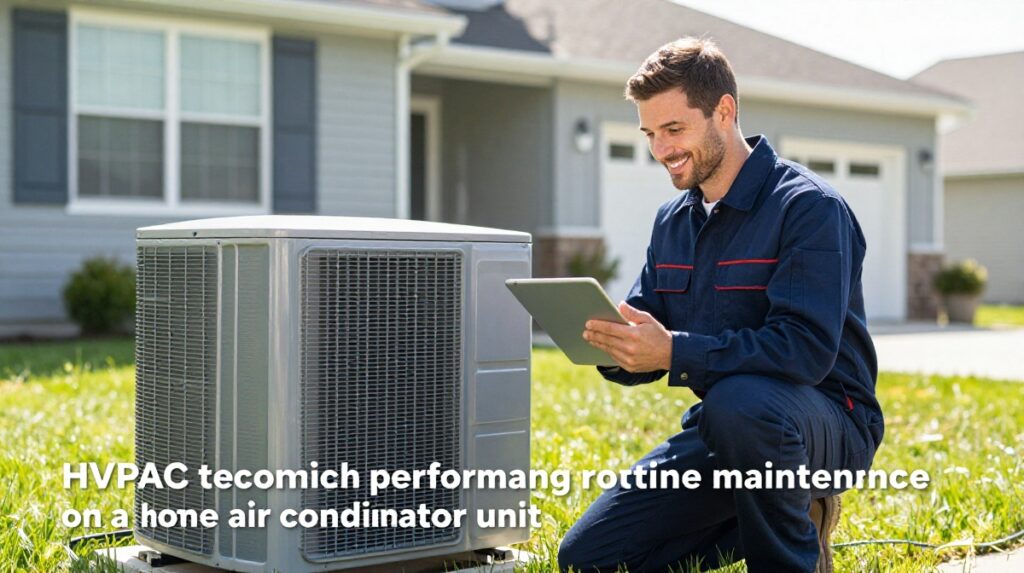
Step outside and look at your condenser. That’s the big box humming away near the house.
See leaves jammed in the fins? Grass clippings? A shrub creeping into it? All of that blocks airflow and forces the system to overheat.
Do this in order:
- Cut the power at the disconnect box or breaker. Always first.
- Pull out leaves, twigs, and debris by hand.
- Rinse the fins gently with a garden hose, low pressure only.
- Trim plants back for at least two feet of clearance on every side.
Your unit needs room to breathe. Give it some.
Step 3: Clean the Vents and Registers
Walk the house. Look at every supply and return vent you pass.
Blocked by a couch? A rug? A laundry pile? Covered vents are a top reason one room feels like a sauna while another feels like a fridge.
Vacuum the grilles. Move the furniture. Let the air reach the room it was meant for. Basic stuff, but people forget it constantly.
Step 4: Check the Thermostat
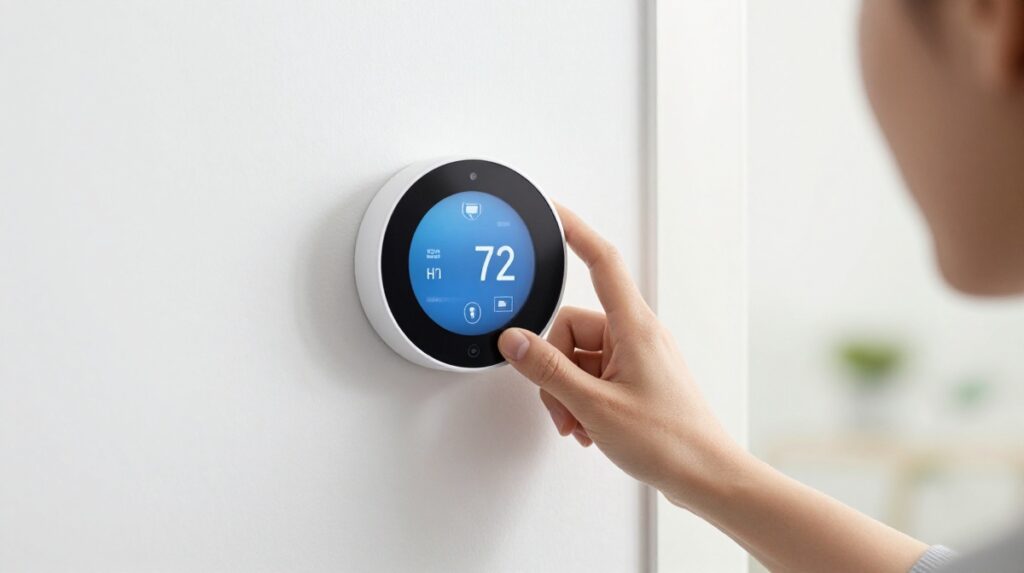
The thermostat is the brain of the whole setup. If it misreads the temperature, everything downstream suffers.
Test it. Set it a few degrees cooler and confirm the AC kicks on. Set it warmer and confirm the heat fires up.
Still running an old dial? Upgrade it. A smart or programmable thermostat stops you from cooling an empty house all day, and it usually pays for itself within a season or two.
Step 5: Flush the Condensate Drain Line
This one’s sneaky. Almost nobody knows about it until water floods the floor.
When your AC runs, it pulls humidity out of the air. That water drains off through a thin pipe called the condensate line. Over time, algae and slime build up inside and clog it.
A backed-up line can shut your whole system down or leak water through your ceiling. Prevent it by pouring a cup of distilled white vinegar down the line every couple of months. It kills the buildup before it becomes a disaster.
Step 6: Use Your Eyes, Ears, and Nose
You don’t need fancy tools to spot early trouble. You just need to pay attention.
- Hear grinding, squealing, or banging? Something mechanical is failing.
- Smell something musty? You might have mold in the ducts.
- Smell something burning? Shut it off and call a pro right now.
Your senses are a free alarm system. Use them.
Step 7: Test the System Before Each Season
Don’t wait for the first heatwave to learn your AC is dead.
In early spring, run the cooling for a full cycle while it’s still mild. In early fall, fire up the heat before you truly need it. Catch a problem in the off-season, and you skip the two-week waitlist every company has when the weather turns nasty.
This one habit saves people a fortune in emergency fees.
Step 8: Inspect and Seal the Ductwork
Here’s a fact that stings. A large share of the air you pay to heat and cool can leak out of bad ducts before it ever reaches a room.
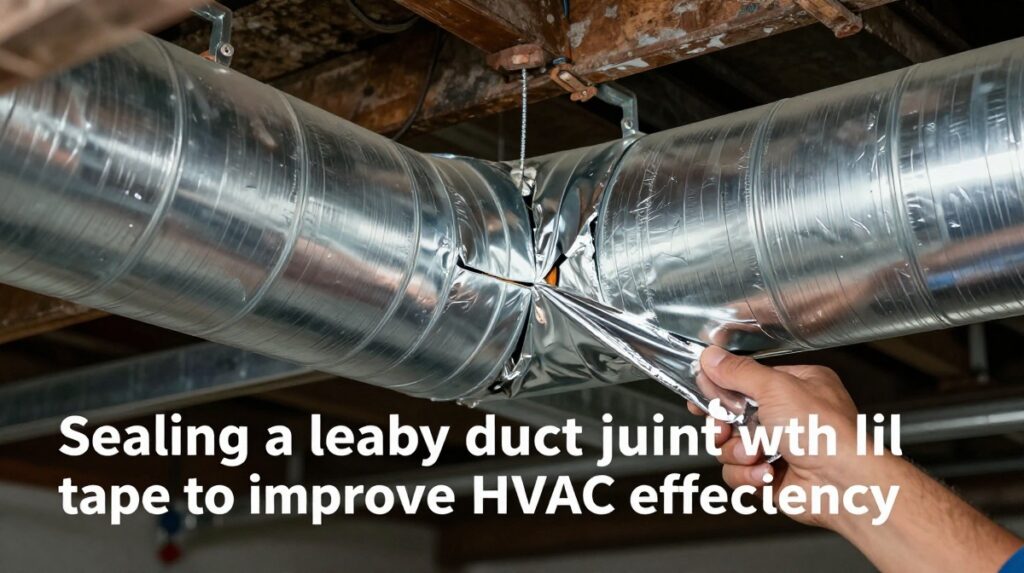
Check any ductwork you can reach in the attic, basement, or crawlspace. Hunt for gaps, loose joints, or sections that have pulled apart.
Seal small leaks with foil tape or mastic. For bigger problems hiding inside walls, bring in a pro with the tools to find them.
Step 9: Keep the Indoor Unit Area Clean
Your furnace or air handler is not a storage shelf. Somehow, it always becomes one.
Boxes. Paint cans. Old holiday bins. Clear all of it out. Clutter around the unit is both a fire hazard and an airflow killer.
Give the equipment a few feet of open space. It needs to pull air freely, and a packed closet won’t allow that.
Step 10: Schedule a Professional Tune-Up Twice a Year
This is where the expert steps in. Some jobs simply aren’t DIY, and that’s fine.
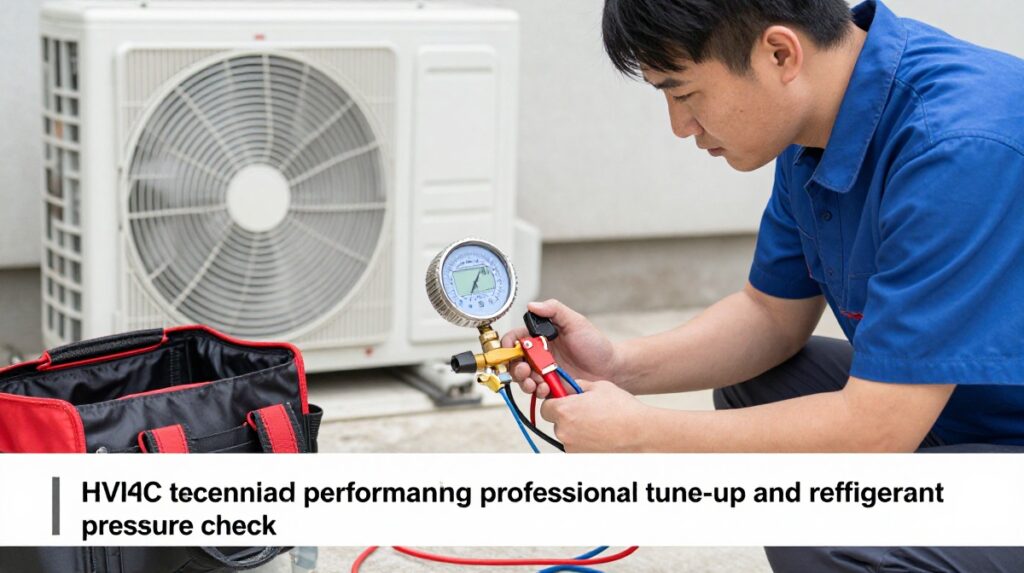
Book a technician twice a year. One visit in spring for cooling, one in fall for heating. A solid tune-up covers what you can’t safely handle yourself.
- Checking and topping off refrigerant levels
- Testing electrical connections and capacitors
- Inspecting the heat exchanger for dangerous cracks
- Lubricating motors and moving parts
- Measuring real system performance with gauges
It’s a modest cost that quietly prevents the giant repair bills.
DIY or Call a Pro? Here’s the Line
People always ask where to draw the line. It’s simpler than you’d think.
Do it yourself:
- Filter changes
- Cleaning vents and the outdoor unit
- Flushing the drain line
- Visual checks and listening for trouble
Leave it to a licensed tech:
- Anything with refrigerant, which is legally regulated and off-limits without certification
- Electrical repairs
- Gas line and heat exchanger work
- Anything that opens up the sealed system
My rule is plain. If it involves gas, refrigerant, or wiring, hands off. The cheap call is the one you make before something breaks.
Your Season-by-Season HVAC Schedule
Ten steps feel like a lot? Spread them across the year and it’s barely any work.
Spring
- Replace the filter
- Clean and clear the outdoor condenser
- Flush the drain line with vinegar
- Test the AC on a mild day
- Book the cooling tune-up
Summer
- Check the filter monthly during heavy use
- Keep plants trimmed back from the outdoor unit
- Listen for new noises at peak running hours
Fall
- Replace the filter again
- Test the heat before the first cold night
- Clear space around the indoor furnace
- Book the heating tune-up
Winter
- Swap the filter every month or two
- Keep vents clear of furniture and rugs
- Watch for short cycling or weak airflow
Print it. Stick it on the fridge. That’s all the structure most homeowners ever need.
Warning Signs Your System Needs Help Now
Sometimes the system tells you it’s struggling. You just have to listen. Don’t brush off these red flags.
- Weak airflow from the vents
- Odd smells, especially burning or musty ones
- New or loud noises like grinding and rattling
- A spike in the energy bill with no change in habits
- Uneven temperatures from room to room
- The system short cycling, flipping on and off fast
Catch these early and you’ll likely face a small fix. Ignore them and small turns into catastrophic.
Frequently Asked Questions
How often should HVAC be serviced?
Twice a year by a pro is the gold standard. One visit before cooling season, one before heating season. On your own, check the filter monthly and swap it as needed.
Can I really do HVAC maintenance myself?
A good chunk of it, yes. Filter changes, cleaning, clearing debris, and flushing the drain line are beginner-friendly. Just leave refrigerant, gas, and electrical work to a certified tech.
How long should an HVAC system last?
With steady care, fifteen to twenty years is realistic. Skip the upkeep and many systems start failing near year ten. The attention you give it directly buys you time.
Does regular maintenance actually save money?
It does, two ways. You spend less monthly because the system runs efficiently. And you dodge the expensive surprise repairs that ambush neglected units. It guards your warranty too.
What’s the single most important task?
Changing the air filter. It’s cheap, fast, and a dirty one causes more breakdowns than almost anything else. If you remember one task, remember that.
Is a maintenance plan worth it?
For most people, yes. Many companies bundle both tune-ups, add priority scheduling, and discount repairs. Best of all, it takes the remembering off your plate, which is half the battle.
Final Word on Protecting Your System
Here’s the honest takeaway. HVAC maintenance isn’t hard, and it isn’t expensive. It just asks you to show up and do a few small things on a steady basis.
Change the filter. Keep things clean. Test before each season. Call a pro twice a year for the technical work. That’s the whole game.
Do that, and the system pays you back. Lower bills. Fewer breakdowns. A unit that outlasts your neighbor’s neglected one by years. You’ll barely think about it, which is the entire point.
Grab this checklist. Set two phone reminders. Get started today. Future you, comfortable on a brutal summer afternoon or a freezing winter night, will be very glad you did.